

Football has a habit of making predictions look silly. A team can arrive with a stronger squad, better recent numbers, and a long list of European achievements, yet still leave the pitch empty-handed.
That unpredictability is one reason champions league results are so closely followed. A surprising scoreline usually isn’t caused by one strange moment. More often, several things happen at once, and the favorite simply fails to deal with them.
Reputation Doesn’t Win the Match
Big clubs naturally attract attention. Their history, trophies, star players, and huge fan bases can make them look unbeatable before the whistle even blows.
But the past doesn’t score goals.
A club may have an impressive European record and still be struggling with confidence. On the other side, a less-fancied team might arrive after a few excellent performances.
Before judging the chances of either side, look at what is happening right now.
Recent form can reveal a lot
Check whether the team has:
- Been scoring regularly
- Kept clean sheets
- Struggled away from home
- Lost important players
- Changed its playing style
Sometimes current form tells a more useful story than reputation.
Tactics Can Make the Difference
A stronger squad doesn’t always have the better tactical plan.
A manager may decide to defend deep, close passing lanes, and wait for counterattacking opportunities. Another coach might instruct his players to press aggressively from the opening minute.
These choices can completely change the balance of a game.
That’s why looking through the ucl fixtures is more interesting when you also consider how the two teams usually play. A possession-heavy side can suddenly look uncomfortable against an opponent that refuses to give its midfield any space.
Football is full of these tactical mismatches.
An Early Goal Changes Everything
Few things can alter a match faster than an early goal.
Imagine the underdog scores within the first 15 minutes. Suddenly, the favorite has to chase the game instead of following its original plan.
Players may push farther forward. Defenders can leave more space behind them. The team that scored may become more compact and wait for another opportunity.
Sometimes that first goal is enough to create a completely different match.
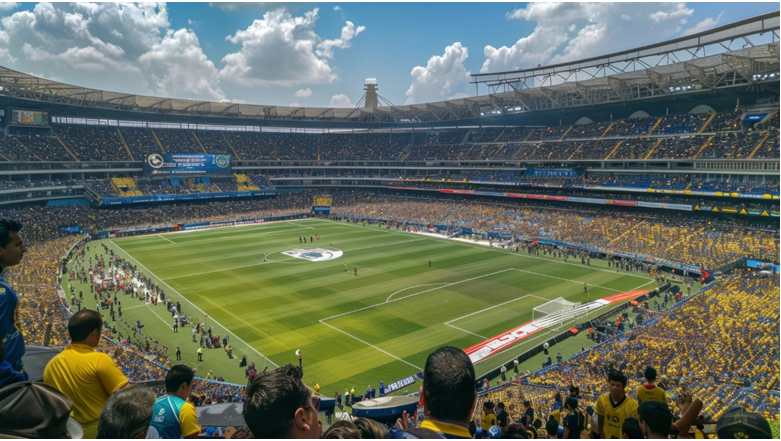
Home Support Can Give Teams Extra Belief
There is a reason European nights at certain stadiums are so memorable.
A loud home crowd can lift the players when the game becomes difficult. Every tackle gets a reaction. Every attack feels dangerous. When an underdog starts believing it can compete, the atmosphere can become part of the contest.
When studying champions league fixtures, the venue is therefore worth noting.
Home advantage isn’t a guarantee of victory, but it can give players an extra push when confidence is already high.
Missing Players Can Cause Hidden Problems
A team can have an expensive squad and still miss one particular player badly.
Perhaps its usual playmaker is unavailable. Maybe the center-back who organizes the defense is suspended. Losing a goalkeeper can also affect the confidence of the entire back line.
The replacement might be talented, but football is about relationships as much as individual ability.
Players who have spent months understanding each other’s movements cannot always be replaced without changing the team’s rhythm.
Fixture Congestion Takes Its Toll
Top European clubs rarely have the luxury of concentrating on one competition.
They may have played a demanding league match just a few days earlier and have another important fixture waiting afterward.
That workload can show up on the pitch.
Players may reach loose balls a fraction too slowly. Pressing becomes less intense. Concentration drops late in the game.
For supporters following champions league games, checking the wider schedule can therefore provide useful context.
Underdogs Often Play With Freedom
There is also something psychological at work.
The favorite is expected to win. The underdog is often expected to struggle.
That difference can influence the way players approach the match.
A team with little pressure may take chances, shoot from distance, press higher, or attack with more freedom. If those risks pay off early, confidence can grow quickly.
Meanwhile, the favorite may start feeling the weight of expectations.
Individual Moments Can Rewrite the Story
Sometimes, there is no complicated explanation.
A goalkeeper makes an outstanding save. A striker produces a brilliant finish. A defender blocks a certain goal. A loose ball falls perfectly to the wrong player.
These moments happen in almost every football match.
That’s why champions league results don’t always tell the complete story. A 2–0 scoreline may look comfortable, even though the losing side created enough chances to change the result.
Don’t Judge Today’s Match by the Team Names
When checking champions league matches today, it’s easy to look at the two clubs and immediately decide who should win.
A better approach is to consider the details.
Ask yourself:
- Who is in better form?
- Which important players are missing?
- How have both teams performed at home or away?
- What tactical approach is likely?
- Has either side played a demanding match recently?
Those questions won’t predict the result, but they can reveal why an upset is possible.
Final Thoughts
Unexpected results are part of what makes European football so enjoyable. Form, tactics, injuries, fatigue, atmosphere, and individual moments can all turn a seemingly predictable game on its head.
For anyone following champions league games, paying attention to those details can make every result more meaningful. TaxiSports can also help fans keep track of the wider Champions League schedule and follow the competition as the season develops.