

The beauty industry is growing rapidly, and eyelash extensions have become one of the most popular beauty services among women who want longer, fuller, and more attractive eyelashes. As demand increases, many people are considering professional training to develop their skills and build a career in this field. One common question beginners ask is how much time they need to learn this beauty technique properly. 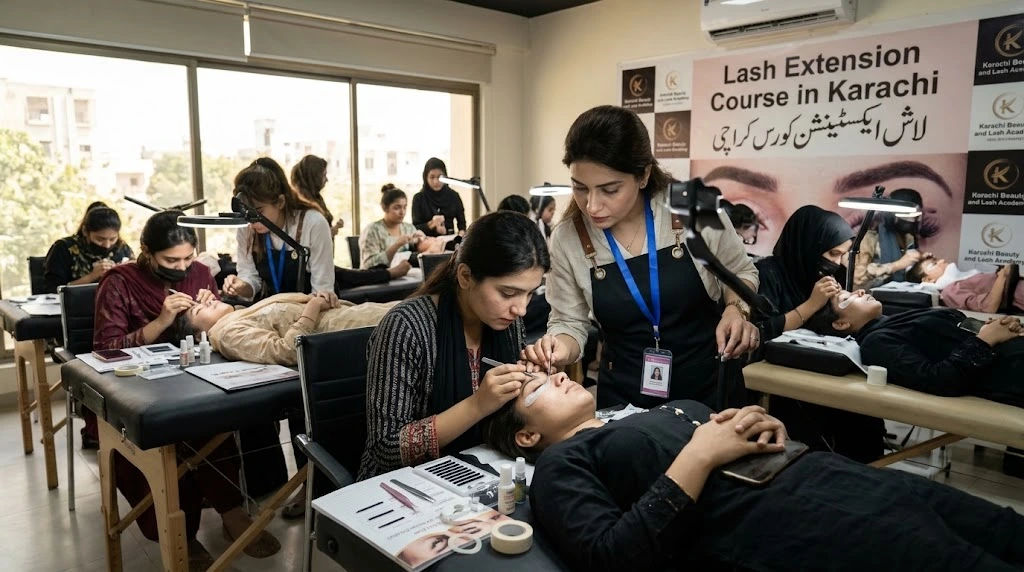 The duration of training depends on several factors, including the academy, course structure, teaching methods, and practical experience provided to students. A lash extension course in Karachi can take anywhere from a few days to several weeks, depending on whether someone chooses basic training or a more detailed professional programme.
Understanding the course duration before enrolling can help students make better decisions. It allows them to select a programme that matches their learning speed, available time, and career goals. In this comprehensive guide, we will explore typical training durations, course content, practical sessions, learning requirements, and the factors that influence how quickly students can become professional lash technicians.
What Is the Average Duration of a Lash Extension Course?
The average duration of eyelash extension training varies from one beauty academy to another. Some institutes offer short introductory workshops, while others provide complete professional programmes that include detailed theory and hands-on practice.
Generally, students may complete their training within the following timeframes:
-
Basic workshop: 1 to 3 days.
-
Beginner training: 1 to 2 weeks.
-
Professional training: 2 to 4 weeks.
-
Advanced training: 4 to 8 weeks or longer.
These are general estimates rather than fixed durations. Every academy follows its own schedule, so students should confirm the actual course length before registration.
A short course may introduce students to essential techniques, but longer programmes usually provide more opportunities to practise different application methods.
Different Types of Lash Extension Courses and Their Duration
Not every student has the same learning requirements. Some want to understand basic eyelash application, while others want to become professional technicians.
For this reason, beauty academies may offer different training levels.
Basic Lash Extension Course
A basic course is suitable for beginners who have little or no experience in the beauty industry.
It usually introduces students to the fundamental techniques of eyelash extensions. They learn about different lash types, basic tools, adhesive products, and application procedures.
A basic programme may take between one and three days, depending on the academy.
Students generally learn:
-
Introduction to eyelash extensions.
-
Different eyelash styles and lengths.
-
Basic lash application techniques.
-
Preparation of natural eyelashes.
-
Understanding adhesives.
-
Basic hygiene and safety practices.
-
Proper removal techniques.
This type of training is helpful for understanding the profession. However, beginners should understand that completing a short workshop does not automatically make them highly experienced technicians.
Beginner Professional Course
A beginner professional programme provides more detailed instruction than a short workshop.
It is designed for students who want to develop practical skills and eventually offer eyelash extension services.
A lash extension course in Karachi at this level may take approximately one to two weeks.
During this period, students learn how to prepare clients, select suitable extensions, isolate natural lashes, and apply extensions correctly.
Practical training is especially important because beginners need time to develop hand control and accuracy.
Advanced Lash Extension Course
Advanced programmes are suitable for students who already understand basic eyelash application.
These courses focus on improving technical ability and learning more specialised techniques.
Depending on the academy, advanced training may take four to eight weeks.
Topics may include:
-
Volume lash application.
-
Hybrid lash techniques.
-
Different lash mapping styles.
-
Advanced styling.
-
Correct lash direction.
-
Retention improvement.
-
Troubleshooting application problems.
-
Professional client consultations.
Advanced training helps technicians expand their services and work with different client preferences.
What Factors Affect the Duration of Lash Extension Training?
The duration of training is not the same for everyone. Several factors determine how long students need to understand and practise eyelash extension techniques.
Student's Previous Experience
Students who already have experience in beauty treatments may understand certain concepts more quickly.
For example, someone familiar with facial treatments, makeup application, or salon hygiene may already understand basic client preparation and professional cleanliness.
However, eyelash extension application requires specific technical skills.
Beginners may need additional practice to develop the concentration and hand coordination required for accurate application.
Course Structure
The structure of the academy's programme also affects the duration.
Some institutes offer intensive daily classes, while others arrange lessons over several weeks.
An intensive programme may cover the same basic topics in fewer days, but students still need independent practice to develop confidence.
A well-organised lash extension course in Karachi should provide enough time for both theoretical learning and practical exercises.
Number of Practical Sessions
Practical training is one of the most important parts of eyelash extension education.
Students need to practise separating individual natural lashes, handling extensions, controlling adhesive, and placing extensions accurately.
If a programme includes several supervised practice sessions, it may take longer to complete.
However, this additional time can help students develop stronger technical skills.
Learning Speed
Every student learns differently.
Some people develop hand coordination quickly, while others need repeated demonstrations and practice.
There is nothing unusual about needing extra time to understand a particular technique.
Students should focus on learning correctly rather than completing their training as quickly as possible.
What Will You Learn During a Lash Extension Course?
Understanding the course content can help students determine whether the training duration is suitable for their goals.
A complete programme should cover several important areas.
Introduction to Eyelash Extensions
Students begin by understanding what eyelash extensions are and how they differ from temporary false eyelashes.
They learn about extension materials, shapes, lengths, thicknesses, and curls.
This knowledge helps technicians select suitable products for different clients.
Natural Eyelashes
Before applying extensions, students need to understand the structure and natural growth cycle of eyelashes.
Natural lashes grow, rest, and shed over time.
Extensions should be applied according to the condition and strength of the natural lashes.
Students also learn why applying extensions that are too heavy can damage natural eyelashes.
Tools and Equipment
Professional eyelash application requires specialised tools.
Students learn how to use different equipment safely and effectively.
Common tools include:
-
Isolation tweezers.
-
Application tweezers.
-
Eyelash extension trays.
-
Lash adhesive.
-
Under-eye pads.
-
Lash brushes.
-
Cleansing products.
-
Adhesive rings or palettes.
They also learn how to clean, store, and maintain their equipment.
Lash Mapping Techniques
Lash mapping helps technicians create attractive eyelash styles according to the client's eye shape and preferences.
Different styles can create different appearances.
For example, natural mapping provides a soft look, while cat-eye mapping creates a more extended appearance towards the outer corners.
Learning these techniques requires practice because every client's natural lashes and eye shape are different.
Adhesive Application
Using eyelash adhesive correctly is an essential professional skill.
Students learn about adhesive handling, storage, humidity, temperature, and appropriate application amounts.
They also learn why adhesive should not contact the skin or enter the eyes.
Proper product selection and application help reduce unnecessary irritation and improve the quality of the service.
How Much Time Is Needed for Practical Training?
Practical training is usually the most important part of becoming a skilled lash technician.
Understanding the theory is useful, but students must also learn how to perform the service accurately.
During practical sessions, students may practise on mannequin heads, training strips, and supervised live models.
Practice on Mannequin Heads
Beginners often start with mannequin heads.
These provide a controlled environment where students can learn how to hold tweezers, isolate lashes, and place extensions.
They can repeat the same movements without worrying about making mistakes on a real client.
Practice on Live Models
Once students understand the basic techniques, they may move on to supervised practice with live models.
This helps them understand the challenges of working with natural eyelashes.
They learn how to position clients comfortably, communicate during appointments, and manage different lash conditions.
Developing Application Speed
Speed improves with regular practice.
Beginners may take longer to complete an eyelash extension appointment because they are still developing precision and coordination.
Professional speed should come naturally through experience.
Students should never sacrifice safety or application quality simply to finish a treatment faster.
Can You Complete a Lash Extension Course in a Few Days?
Yes, some beauty academies offer short courses that can be completed within a few days.
These programmes are generally designed to introduce students to basic techniques.
They may be suitable for individuals who already have beauty experience or want to explore eyelash extensions before choosing more extensive training.
However, completing a short course does not mean someone has mastered every aspect of the profession.
Eyelash extension application requires patience, practice, and an understanding of natural lash health.
A student who completes a three-day programme may still need additional supervised practice before accepting paying clients independently.
When selecting a lash extension course in Karachi, it is important to check whether the academy provides practical sessions, assessments, and opportunities to improve after the classes finish.
Is Online Lash Extension Training Faster Than Physical Training?
Online training has become a convenient learning option for people who cannot regularly attend an academy.
Some courses provide recorded lessons, demonstrations, written materials, and online instructor support.
Students can study at their own pace and revisit difficult topics whenever necessary.
However, online learning has certain limitations.
Benefits of Online Training
Online programmes offer flexibility.
Students can watch lessons according to their schedules and save travelling time.
They can also review demonstrations repeatedly to understand different application techniques.
Limitations of Online Training
The biggest limitation is the lack of direct supervision.
A student may understand how to isolate and apply lashes after watching a video but may struggle when performing the technique.
An instructor cannot always identify small mistakes through recorded videos.
For this reason, practical training is especially valuable for beginners.
A combination of online theory and supervised practical sessions can provide a balanced learning experience.
How to Choose the Right Lash Extension Academy in Karachi
Selecting the right academy is just as important as understanding the training duration.
A course that finishes quickly may not provide enough practical experience.
Students should compare different institutes before making a decision.
Check the Course Curriculum
Always review the complete course outline.
A professional programme should explain what students will learn during each training session.
Look for topics such as lash isolation, application, mapping, hygiene, adhesive handling, and removal.
Ask About Practical Training
Practical sessions should be an essential part of the programme.
Ask whether students practise on mannequin heads and live models.
Also, find out whether an instructor supervises the practical work.
Review the Instructor's Experience
An experienced instructor can explain technical details and help students correct mistakes.
Check the instructor's professional background, training experience, and previous work.
You can also request examples of student work, if available.
Certification Requirements
Some academies provide certificates after students complete their training.
Before enrolling, ask what the certificate represents and whether students must pass a practical assessment.
A certificate can demonstrate that someone has completed a programme, but it does not replace practical ability or professional experience.
Compare Fees and Training Duration
Course fees can differ depending on the academy, instructor, products, and training facilities.
Instead of selecting a programme based only on its price, compare the overall value.
Check whether training materials, practice equipment, models, and post-course support are included.
What Happens After Completing the Course?
Finishing a training programme is an important achievement, but professional development continues after graduation.
Students should spend time improving their techniques and building confidence.
Continue Practising
Regular practice helps improve accuracy, application speed, and styling ability.
Students can practise on training materials and supervised models to strengthen their skills.
They should also review their work to identify areas that need improvement.
Build a Professional Portfolio
A portfolio allows new technicians to display their work.
Students can take clear photographs of completed treatments, with client permission.
A professional portfolio can help attract potential customers and demonstrate different styling techniques.
Learn Client Communication
Professional lash technicians need good communication skills.
They should understand client expectations, explain available styles, and discuss aftercare requirements.
They must also ask about relevant allergies, eye sensitivities, and previous reactions before treatment.
Hygiene and Safety
Hygiene should remain a priority throughout a technician's career.
Tools must be cleaned and disinfected appropriately, disposable items should not be reused, and work surfaces should be maintained properly.
Technicians should avoid performing treatments when clients have active eye infections or other conditions that make the procedure unsuitable.
Can Beginners Start Earning After Completing Training?
Yes, beginners may start building a career after completing appropriate training and gaining sufficient practical competence.
However, earning opportunities depend on several factors.
These include technical ability, customer service, location, marketing, product quality, and professional reputation.
New technicians may begin by offering services to a small number of clients while continuing to improve their skills.
They can gradually expand their customer base through referrals, social media, and professional networking.
It is important to avoid rushing into independent work before understanding application safety and proper client assessment.
A good training programme should prepare students for the practical responsibilities of working with clients.
Tips for Completing Your Training Successfully
Students can make their learning experience more productive by following a few simple practices.
Attend Every Class
Regular attendance helps students understand each topic in the correct order.
Missing important demonstrations can make later lessons more difficult.
Take Notes
Write down important information about lash types, adhesive handling, application techniques, and hygiene.
These notes can become useful reference material after graduation.
Ask Questions
Do not hesitate to ask instructors about techniques that seem difficult.
Understanding why a particular method is used can help students avoid repeated mistakes.
Practise Between Lessons
Consistent practice is more effective than practising only during academy hours.
Even short practice sessions can help improve hand coordination and confidence.
Focus on Quality
Accuracy should always come before speed.
Students should first learn to isolate and apply extensions correctly before trying to complete appointments more quickly.
Conclusion
The time required to complete eyelash extension training depends on the student's experience, learning speed, course structure, and professional goals. A basic workshop may take only one to three days, while beginner professional programmes commonly require one to two weeks. Advanced training may take several weeks or longer.
Choosing the right lash extension course in Karachi is about more than finding the shortest programme. Students should look for an academy that provides comprehensive lessons, experienced instructors, practical demonstrations, and enough opportunities to develop their technical abilities.
Beginners should pay particular attention to lash isolation, adhesive handling, natural lash health, hygiene, and different styling techniques. These skills are essential for providing safe and attractive results.
It is also important to remember that completing a course is only the beginning of professional development. Regular practice, constructive feedback, and experience with different clients help technicians become more confident and capable.
Before enrolling, compare course durations, fees, practical facilities, instructor experience, and certification details. A programme that provides quality education and sufficient hands-on practice can be a valuable investment in your future.
Whether you want to work in a beauty salon, provide freelance services, or eventually establish your own eyelash extension business, proper training can help you take the first step towards your career goals.