

Yes, Dynamic short links free services can track clicks, although the exact tracking features depend on the platform you use and the type of link it provides. A basic short link may simply redirect visitors from a shorter URL to a longer destination. 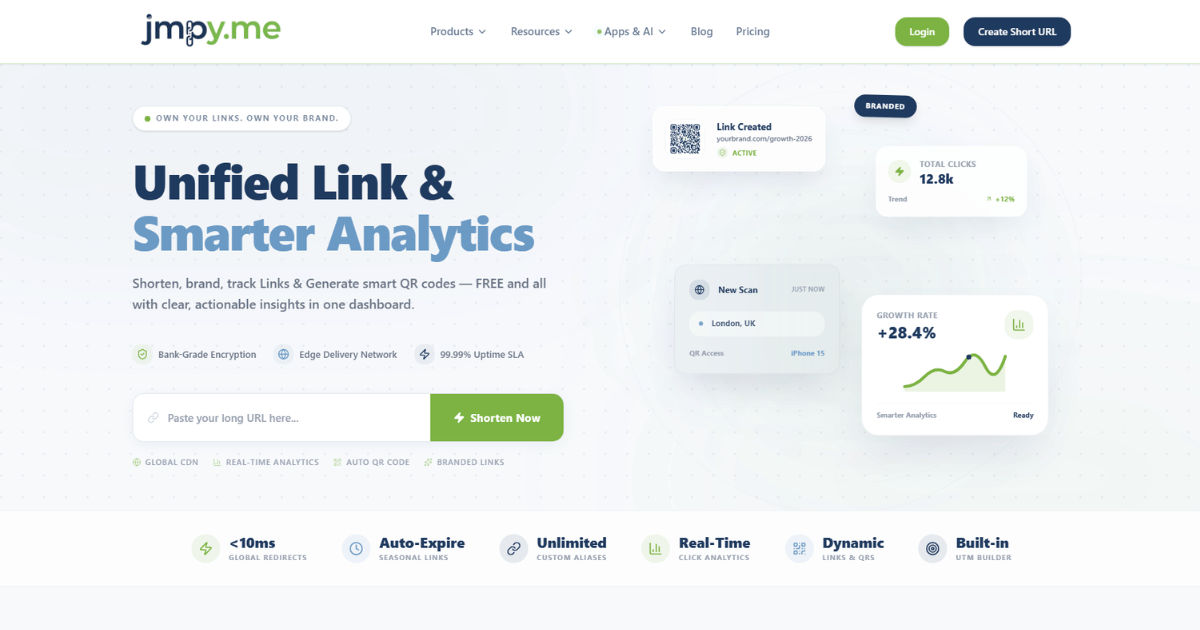
This makes dynamic short links useful for marketers, businesses, content creators, social media managers, website owners, and anyone who wants to understand how their links perform.
Imagine that you share a long product URL on social media, in an email, or on a printed advertisement. You may know that people are clicking the link, but without tracking, you may not know how many people clicked it or which campaign generated the most interest.
A dynamic short link can solve this problem.
Instead of sending visitors directly to the final destination, the shortened URL works as an intermediate address. When someone clicks it, the link service records relevant information before redirecting the visitor to the intended webpage.
This process usually happens very quickly. From the visitor's perspective, the experience may feel almost instant.
The important point is that Dynamic short links free options can offer more than just shorter URLs. Depending on the provider, they may provide analytics that help you measure campaign performance and understand audience behavior.
However, there are important differences between basic URL shorteners and advanced dynamic link platforms. Some free services provide only basic click counts, while others may offer detailed analytics, editable destinations, QR codes, campaign tracking, and other features.
Understanding how this tracking works can help you choose the right type of link for your needs.
What Is a Dynamic Short Link?
A dynamic short link is a shortened URL that can redirect users to a destination while allowing the link owner to manage or monitor the link.
A traditional long URL might contain dozens or even hundreds of characters. It may include tracking parameters, product information, category names, session identifiers, or other technical details.
For example, a long URL might be difficult to remember and inconvenient to share.
A short link replaces that complicated address with a much shorter one.
The key difference between a simple shortened URL and a dynamic short link is flexibility.
With many dynamic links, you can change the destination URL without changing the short link itself. This means you can continue using the same short URL while directing visitors to a different webpage.
For example, imagine you print a QR code on a brochure that points to a short link.
If the final webpage changes later, a dynamic link may allow you to update the destination without printing a new QR code.
This is particularly useful for businesses running long-term campaigns.
Dynamic links can also be connected to analytics systems. When a user clicks, the platform may record information about that interaction.
The available information depends on the provider and its privacy policies.
Some platforms may show:
- Total clicks
- Unique visitors
- Clicks over time
- Approximate geographic location
- Device category
- Operating system
- Browser
- Referring source
- Campaign performance
- QR code scans
Not every service provides all of these features, especially on a free plan.
How Does Click Tracking Work?
The basic process is relatively simple.
When you create a dynamic short link, the service generates a unique short URL. This URL is connected to your chosen destination.
Suppose your original destination is a product page.
Instead of sharing the original address, you share the short link.
When someone clicks the short link, the request first reaches the link management platform. The platform can record information about the request before sending the visitor to the final destination.
The process generally looks like this:
User clicks short link → Tracking system records the click → User is redirected → Destination page opens
The entire process usually happens in a fraction of a second.
The tracking system may record a timestamp showing when the click occurred. It may also identify technical details associated with the request.
For example, if 500 people click your link during a marketing campaign, the dashboard might show how those clicks were distributed throughout the day.
You may discover that most clicks happened between 7 p.m. and 10 p.m.
That information could help you understand when your audience is most active.
The same principle can be used to compare different campaigns.
You might create one short link for Facebook, another for Instagram, and another for an email newsletter.
Each link can lead to the same webpage.
If one link receives significantly more clicks, you have evidence that the corresponding channel is generating more traffic.
What Information Can Dynamic Short Links Track?
The tracking capabilities vary from one service to another.
Some free platforms provide basic analytics, while premium platforms may provide more detailed reports.
Here are some of the most common types of information that may be available.
Total Clicks
Total clicks are one of the most basic metrics.
This number tells you how many times your short link was clicked.
For example, if your dashboard reports 1,000 clicks, it means the link was accessed 1,000 times according to the platform's measurement system.
However, total clicks do not necessarily mean 1,000 different people visited your website.
The same person may click the link multiple times.
Someone might click once in the morning and again later in the day.
Therefore, total clicks should not automatically be treated as the number of unique visitors.
Unique Clicks
Some tracking systems attempt to estimate unique visitors or unique clicks.
This can provide a better idea of how many individual users interacted with your link.
However, identifying unique users accurately is difficult.
A person may use multiple devices, clear cookies, change networks, or use privacy tools.
For this reason, unique visitor data should generally be considered an estimate rather than an absolute measurement of individual people.
Clicks Over Time
Time-based analytics can show when people click your links.
You may see data organized by:
- Hour
- Day
- Week
- Month
This information can be valuable for marketing campaigns.
Suppose you publish content at different times throughout the week.
By comparing click activity, you might discover that your audience is more responsive on certain days.
You can then use that information to improve your publishing schedule.
Geographic Data
Some dynamic link services provide approximate geographic information.
For example, a report might indicate that clicks came from:
- United States
- United Kingdom
- Canada
- Australia
Some platforms may provide more detailed regional information.
However, location data is generally based on technical information such as IP addresses and may not always be perfectly accurate.
VPNs, mobile networks, corporate networks, and privacy systems can affect the results.
Therefore, geographic tracking should be treated as approximate.
Device Information
Dynamic short links may also track the type of device used to click.
For example, your analytics might show that visitors used:
- Mobile phones
- Tablets
- Desktop computers
This can help you understand how your audience interacts with your content.
If most clicks come from mobile devices, you may want to make sure your destination page loads quickly and works well on smaller screens.
Operating System and Browser
Some tracking platforms may provide technical information about the user's operating system or browser.
You might see categories such as Android, iOS, Windows, macOS, Chrome, Safari, or other browser environments.
This information can help with technical optimization.
For example, if a large percentage of your audience uses mobile devices, a mobile-first website design may be especially important.
Referral Sources
Some platforms can help identify where traffic originated.
For example, you may want to compare clicks generated by different marketing channels.
You could create separate links for:
- Social media
- Printed materials
- Online advertisements
- Blog posts
- QR codes
Using separate links allows you to compare performance more easily.
However, referral information is not always available or accurate. Privacy settings and browser restrictions can limit what information is passed to tracking systems.
Can Free Dynamic Short Links Track Clicks?
Yes, some free dynamic short link services can track clicks.
However, free plans often have limitations.
A service may provide basic click statistics but restrict advanced analytics to paid users.
For example, a free account might show the total number of clicks but not provide detailed information about individual campaigns.
Another service may offer geographic data but limit how long analytics are stored.
Therefore, the phrase Dynamic short links free does not automatically mean that every free service offers the same tracking capabilities.
You should always check the features available under the specific plan you are considering.
If your needs are simple, a free option may be sufficient.
For example, a small business owner might only need to know whether a promotional link is receiving clicks.
A content creator might want to know how many people clicked a link shared on social media.
In these situations, basic analytics may be enough.
However, larger marketing campaigns may require more detailed reporting.
Why Is Click Tracking Useful?
Click tracking turns a simple URL into a measurable marketing tool.
Without tracking, you may share a link and have no clear idea whether people are using it.
With tracking, you can collect performance information and make better decisions.
This is particularly useful when you are investing time or money into promotion.
For example, suppose you run two campaigns promoting the same product.
Campaign A receives 100 clicks.
Campaign B receives 1,000 clicks.
This difference gives you valuable information.
You can investigate why Campaign B performed better.
Perhaps it used a more attractive headline.
Maybe the audience was better targeted.
Perhaps the link was shared at a better time.
The click data does not always explain the reason by itself, but it gives you a starting point for analysis.
Using Dynamic Short Links for Social Media
Social media platforms are one of the most common places to use short links.
Long URLs can look messy in posts, profiles, comments, and messages.
A shorter link is easier to read and share.
More importantly, tracking can help you understand whether your social media efforts are producing traffic.
Suppose you promote a blog post on three platforms.
You could create separate dynamic short links for each platform.
The destination remains the same, but each short link has its own analytics.
At the end of the campaign, you can compare the results.
This approach is more useful than simply looking at your website's overall traffic because you can connect individual links with specific promotional activities.
Using Dynamic Short Links in Email Marketing
Email campaigns can also benefit from trackable short links.
Suppose you send a newsletter to your subscribers.
You include a link encouraging readers to visit a product page.
A dynamic short link can help you measure how many people clicked.
You could also create separate links for different sections of the email.
For example, one link might lead to a product page, while another leads to a blog article.
This can help you understand which content attracts more attention.
However, email tracking has its own limitations.
Some email systems modify links or scan them automatically for security purposes.
These automated systems can sometimes create clicks that do not represent genuine human engagement.
This is one reason why click statistics should be interpreted carefully.
Using Dynamic Short Links with QR Codes
Dynamic short links and QR codes work particularly well together.
A QR code can contain a short URL that directs users to a webpage.
The advantage of using a dynamic link is that you may be able to change the destination later.
Imagine a restaurant printing a QR code on a menu.
The code could initially direct customers to a digital menu.
Later, the restaurant could update the dynamic link to direct visitors to a special offer or seasonal menu.
The QR code itself does not need to be replaced.
Tracking can also show how many people scanned the QR code, depending on the system used.
This makes dynamic links useful for both digital and physical marketing.
They can connect offline materials with online destinations.
Can You Track Where Every Click Came From?
Not always.
This is an important limitation.
Many people assume that a short link can identify exactly who clicked and where they came from.
In reality, tracking systems generally cannot provide perfect information about every visitor.
Privacy tools, browsers, VPNs, ad blockers, network configurations, and security software can all affect tracking.
Some platforms may also hide or remove referral information.
For example, a user may click a link from a private messaging application where the original source is not clearly passed to the destination.
As a result, you may see a click without knowing exactly how the person found the link.
This is normal.
Good analytics should be viewed as useful measurement rather than perfect surveillance.
Do Dynamic Short Links Track Personal Information?
This depends on the service and its configuration.
A standard link tracking system usually records technical and aggregate information rather than directly identifying a person by name.
For example, analytics might tell you that a click came from a mobile device in a particular region.
That does not necessarily tell you the person's identity.
However, some advanced systems can combine link tracking with other marketing technologies.
For this reason, privacy should always be considered.
If you use dynamic links for business or marketing purposes, review the provider's privacy policy and terms of service.
You should also follow applicable privacy regulations and avoid collecting unnecessary information.
The goal should be to understand campaign performance without violating user expectations.
Are Click Counts Always Accurate?
No tracking system is perfect.
Click counts can be affected by automated activity.
For example, security systems may scan links to protect users from malicious websites.
Email providers may check links before allowing users to access them.
Social platforms may also process URLs automatically.
These automated requests can sometimes appear in analytics as clicks.
Repeated clicks from the same person can also increase the total.
Therefore, a reported click count should not always be interpreted as the exact number of human visitors.
If accurate measurement is important, compare short-link analytics with your website analytics.
Looking at multiple data sources can give you a more complete picture.
Dynamic Short Links vs Traditional Short Links
The main difference is flexibility and control.
A traditional shortened URL may simply redirect users to a fixed destination.
A dynamic short link may allow you to manage the destination and track performance.
For example, a basic shortener might provide a shorter version of your URL.
A more advanced dynamic platform might let you:
- Change the destination
- Track clicks
- Monitor campaign performance
- Create QR codes
- Organize multiple links
- View geographic information
- Analyze devices
- Manage campaigns
The right choice depends on your needs.
If you only need a shorter URL, basic shortening may be enough.
If you want measurable campaigns, dynamic links are usually more useful.
What Should You Look for in a Free Service?
If you are searching for Dynamic short links free tools, do not focus only on whether the service is free.
Look at the actual features.
First, check whether click tracking is included.
Some free plans may provide only limited analytics.
Next, check whether the links expire.
An apparently free service may have restrictions on link duration or the number of clicks.
You should also consider whether you can edit the destination URL.
This feature can be extremely useful for long-term campaigns.
Another important factor is analytics history.
Some platforms may store data for only a limited period.
Also consider whether the service provides a reliable dashboard.
A simple and clear analytics interface can make your data much easier to understand.
Finally, consider the reputation and reliability of the provider.
A short link is useless if the service becomes unavailable.
Are Dynamic Short Links Good for Marketing?
Yes, they can be extremely useful for marketing.
They allow marketers to measure engagement across different channels.
For example, a company could create separate links for:
- Facebook advertising
- Instagram promotion
- Email marketing
- Printed brochures
- Business cards
- QR code campaigns
Each link can point to the same landing page.
By comparing click data, marketers can see which channels generate the most activity.
This can help with future budget decisions.
If one channel consistently produces strong results, the company may choose to invest more resources there.
However, clicks are only one part of marketing performance.
A campaign can generate many clicks without producing sales.
For that reason, click tracking should be combined with other metrics such as conversions, leads, purchases, or sign-ups.
Clicks Are Not the Same as Conversions
This distinction is extremely important.
A click means someone interacted with your link.
A conversion means the visitor completed a desired action.
That action might be:
- Making a purchase
- Filling out a form
- Signing up for a service
- Downloading a resource
- Booking an appointment
Suppose your short link receives 10,000 clicks.
If only five people buy the product, the campaign may not be successful.
On the other hand, another campaign might receive only 500 clicks but generate 100 sales.
The second campaign could be much more valuable.
Therefore, dynamic link analytics should be considered one part of a broader measurement strategy.
How Businesses Can Use Dynamic Link Analytics
Businesses can use dynamic links in many practical ways.
A retail company might use them to promote specific products.
A restaurant could use them in printed menus and promotional materials.
A real estate agent could create separate links for different property listings.
An event organizer could track registrations from different advertising channels.
A service provider could use different links in email campaigns and social media posts.
In each case, the short link creates a measurable connection between promotion and website activity.
Over time, these insights can help businesses make better decisions.
Common Mistakes When Using Trackable Short Links
One common mistake is using the same link everywhere.
If you use one short link across social media, email, print advertising, and paid ads, it becomes difficult to determine which channel generated the clicks.
Creating separate links for different campaigns is usually better.
Another mistake is focusing only on total clicks.
As discussed earlier, clicks do not automatically equal customers.
A third mistake is ignoring the destination page.
A great short link cannot compensate for a slow, confusing, or poorly designed webpage.
The entire user journey matters.
Finally, some people use too many links without organizing them properly.
If you create dozens or hundreds of links, establish a clear naming system so you can identify each campaign later.
Are Dynamic Short Links Safe?
Generally, dynamic short links can be safe when provided by a reputable service.
However, shortened URLs can hide the final destination.
This creates a potential security concern.
A person clicking a short link may not know where it will lead before opening it.
Unfortunately, malicious individuals can also use URL shorteners to disguise harmful websites.
For this reason, users should be cautious when clicking unfamiliar shortened links.
Businesses should choose reputable providers and avoid creating links that could confuse their audience.
If trust is important, branded short links can sometimes be a better option.
A recognizable domain can make users more comfortable clicking.
How to Get the Most Value from Dynamic Short Links
The best approach is to use tracking data as part of a larger strategy.
Start by defining what you want to measure.
If your goal is website traffic, clicks may be the primary metric.
If your goal is sales, connect link performance with conversion data.
Create separate links for important campaigns.
Use consistent naming conventions.
Review analytics regularly rather than checking them once and forgetting about them.
Look for patterns.
Ask questions such as:
Which campaign generated the most clicks?
Which platform performed best?
When were users most active?
Which links produced meaningful conversions?
Where did the traffic come from?
These questions turn raw data into useful insights.
How to Interpret Click Data Correctly
Good analytics requires context.
A sudden increase in clicks might seem positive, but it could have several explanations.
Perhaps a post went viral.
Maybe a large email campaign was sent.
Alternatively, automated scanners could have generated unusual traffic.
Always compare results with what was happening during the same period.
Look at trends rather than focusing on one number.
For example, if your links receive steadily increasing clicks over several months, that may indicate growing interest.
If clicks suddenly drop, investigate possible causes.
The link might be broken.
The campaign may have ended.
Your audience may have changed.
The destination page may be unavailable.
Analytics are most useful when you combine numbers with real-world context.
Frequently Asked Questions About Dynamic Short Links
Can a Dynamic Short Link Track Every Click?
It can record many link requests, but it cannot guarantee that every recorded click represents a unique human visitor.
Automated systems, repeated clicks, and privacy technologies can affect the results.
Can I Track Clicks with a Free Dynamic Short Link?
Yes, many free services offer click tracking.
However, the amount of data available varies between providers.
Some free plans offer basic click counts, while advanced analytics may require payment.
Can Dynamic Short Links Track Who Clicked?
Usually, they do not directly identify a person's name.
They may collect technical or approximate information, such as device type, location, or browser.
The exact information depends on the platform.
Can I Change the Destination of a Dynamic Short Link?
Many dynamic link services allow this.
That is one of the main advantages of dynamic links.
You may be able to update the destination while keeping the same short URL.
Do Short Links Track IP Addresses?
Some services may process IP addresses as part of their analytics or security systems.
However, the exact data collected and retained depends on the provider's policies.
Users should review the privacy documentation before choosing a service.
Are Dynamic Short Links Better Than Long URLs?
They are not always better, but they can be more convenient.
They are easier to share and can provide tracking and management features.
For campaigns, QR codes, and printed materials, dynamic links can be particularly useful.
Can I Use Dynamic Links for QR Codes?
Yes.
Dynamic links are often useful for QR codes because the destination can potentially be changed without replacing the printed QR code.
They can also provide scan or click analytics, depending on the platform.
What Is the Difference Between Clicks and Unique Clicks?
Clicks represent total interactions recorded by the system.
Unique clicks attempt to estimate how many distinct visitors interacted with the link.
The exact calculation varies by platform, and neither metric is necessarily perfect.
Can Dynamic Links Track Social Media Traffic?
They can help measure traffic from social media when you use separate links for different platforms or campaigns.
However, referral information may sometimes be limited by privacy settings and platform behavior.
Should I Use Free or Paid Dynamic Short Links?
A free service may be enough for basic needs.
Paid services are generally more suitable when you need advanced analytics, higher limits, branded domains, detailed campaign management, or business-level features.
Conclusion
Dynamic short links can absolutely track clicks, and this is one of the main reasons they are useful beyond simply making URLs shorter.A dynamic link can act as a bridge between your audience and your online content while giving you valuable information about how people interact with your campaigns.
When someone clicks a trackable short link, the system may record information such as the time of the click, the number of clicks, approximate location, device type, and other technical details.The exact information available depends on the service.
Free options can be a practical starting point for individuals, small businesses, bloggers, and creators who want basic analytics without paying for a subscription. However, not every Dynamic short links free service offers the same capabilities.Some may provide only basic click counts.
Others may include additional information about devices, locations, or traffic sources.Advanced features may be restricted to paid plans.The most important thing is to understand what you actually need before choosing a service.
If your only goal is to make a long URL shorter, a basic URL shortener may be enough.If you want to measure marketing performance, dynamic tracking features become much more valuable.