

A white label LMS can do much more than host online lessons. For educators, training companies, coaches, and businesses, it can provide the tools needed to create, market, sell, and manage online courses under their own brand. Instead of sending learners to a third-party platform, businesses can offer courses through a branded learning environment that feels like their own digital product.
As online education continues to grow, selling courses has become an important business model. However, simply creating a course does not guarantee sales. Businesses need a platform that supports payment processing, course access, learner management, marketing, branding, and a smooth customer experience.
This is where a white-label learning management system can become useful. It can bring course delivery and sales features together in one platform, helping businesses turn educational content into a structured online product.
What Is a White Label LMS?
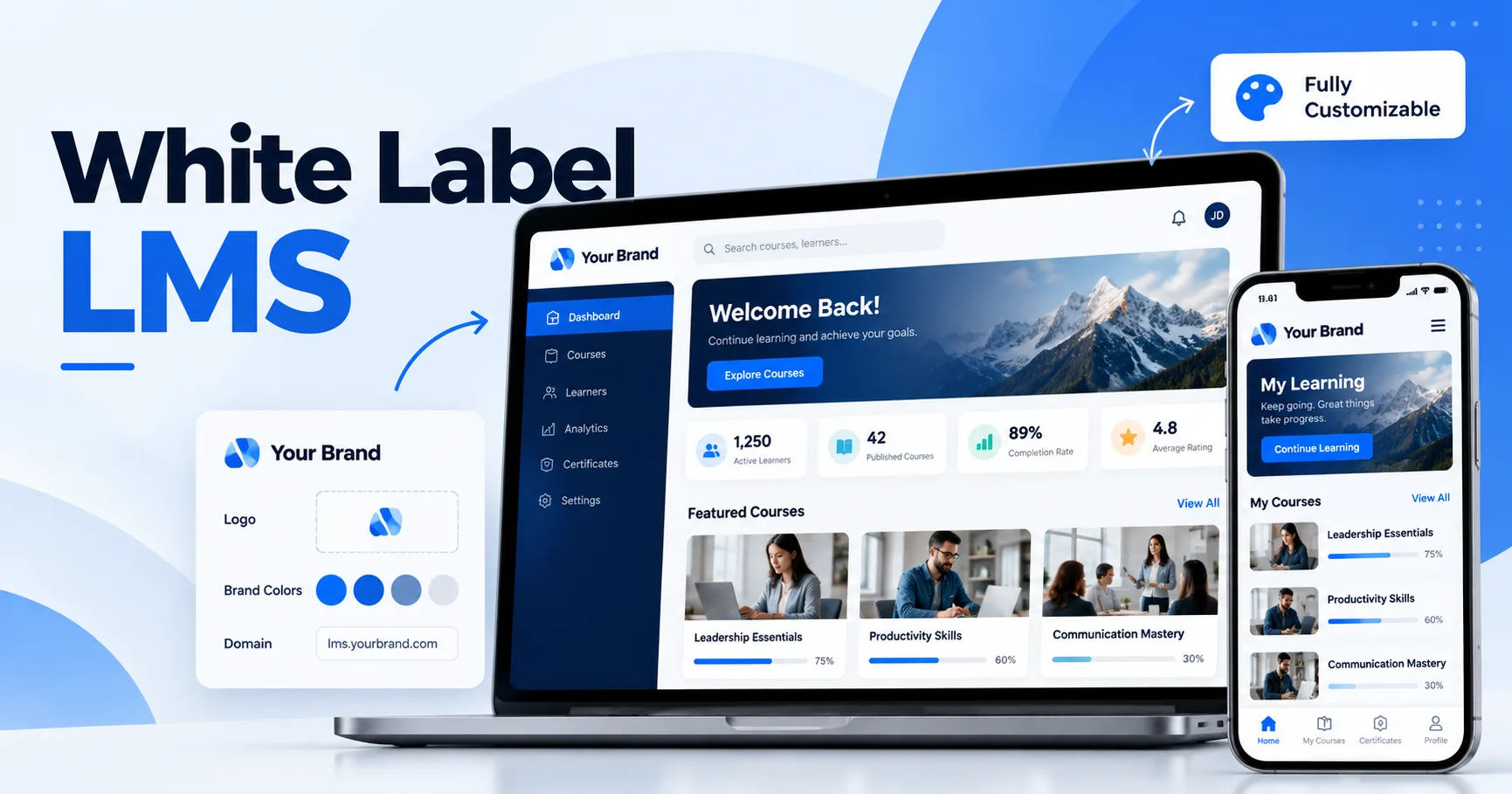
A white label LMS is a learning management system that can be customized and presented under a company's own brand. Instead of displaying the software provider's branding, businesses can often use their own logo, colors, domain, and other visual elements.
The main purpose is to create a branded learning experience without developing an LMS completely from scratch.
For example, a training company could create an online academy using its own business name. Students might visit a branded website, browse available courses, make payments, create accounts, and access lessons without necessarily seeing the technology provider's branding.
This makes the platform useful for organizations that want greater control over their online education business.
Can a White Label LMS Actually Sell Courses?
Yes, many white-label LMS platforms can support course sales, although the exact features depend on the provider and plan.
A platform designed for commercial course delivery may include tools for creating course catalogs, setting prices, accepting payments, managing enrollments, and controlling access to purchased content.
The process can work much like an online store.
A potential student visits the course page and reads about the program. They review the curriculum, instructor information, pricing, and other details. If they decide to purchase, they proceed to checkout. After successful payment, the system can automatically provide access to the course.
This reduces the amount of manual work required from the course provider.
Course Catalogs
A course catalog gives potential customers a clear view of the educational products available.
Businesses can organize courses by subject, skill level, department, instructor, or other categories. A well-organized catalog makes it easier for visitors to discover relevant courses.
Course pages can also include descriptions, learning objectives, lesson information, duration, pricing, and other details that help customers understand what they are buying.
Online Payments
Payment functionality is one of the most important requirements for course sales.
Depending on the LMS, businesses may be able to connect payment gateways that allow customers to purchase courses online. Some systems support one-time payments, while others may provide subscription or recurring-payment options.
The available payment methods vary between platforms and countries, so businesses should check whether the system supports the gateways their customers commonly use.
Automatic Enrollment
After payment, automatic enrollment can make the buying experience much smoother.
Instead of an administrator manually creating an account and assigning the course, the system can handle these steps automatically. The learner can receive login information or instructions for accessing their new course.
This is particularly useful when a business has many customers.
How a White Label LMS Helps Build a Course Business
Selling courses involves more than collecting payments. The platform also needs to support the customer journey before, during, and after purchase.
A white-label system can connect several parts of this process.
Building a Professional Brand
Branding can influence how customers perceive an online course business.
A customized LMS can allow businesses to use their own name, logo, colors, domain, and other brand elements. This creates a more consistent experience between the company's website, marketing materials, and learning platform.
For a business that plans to sell courses over a long period, having a recognizable educational brand can be valuable.
Creating Different Course Products
A business may want to sell several types of educational products.
For example, it could offer a beginner course, an advanced program, a certification course, and a premium training package.
A suitable LMS can organize these products while providing different access rules and pricing structures.
This allows businesses to create a broader product range rather than depending on one course.
Supporting Different Pricing Models
Course businesses do not always use a single pricing model.
Some courses work well as one-time purchases. Others may be better suited to monthly or yearly subscriptions.
Businesses may also create bundles that combine multiple courses into one package.
The ability to support different pricing structures depends on the specific platform, but commercial LMS solutions often provide features designed for these models.
Important Features for Selling Courses
Not every LMS is equally suitable for course sales. Businesses should examine the commercial features carefully before choosing a platform.
Payment Gateway Integration
Payment integration should be near the top of the evaluation list.
The platform should work with payment methods that customers can use easily. Businesses should also examine transaction fees, supported currencies, refund handling, and payment security.
A complicated checkout process can create unnecessary friction.
Course Landing Pages
A course landing page acts as a sales page for the educational product.
It should clearly explain what the student will learn, who the course is for, how the course works, and what the customer receives after purchasing.
Some LMS platforms provide built-in page-building tools, while others may integrate with external website systems.
Coupons and Discounts
Promotional pricing can be useful when launching a new course or running a seasonal campaign.
Depending on the platform, businesses may be able to create discount codes or special offers.
For example, a training company could provide an introductory discount to its first group of students.
Certificates
Certificates can add value to courses, particularly in professional and corporate training.
After completing required lessons or assessments, students may receive a certificate showing that they completed the program.
Certificates can also make courses more attractive to learners who want evidence of their training.
Assessments and Quizzes
Quizzes, tests, and assignments can make courses more interactive.
They can also help instructors determine whether learners understand the material.
For professional training, assessments may be especially important because they provide a structured way to measure progress.
How Marketing and Course Sales Work Together
An LMS can provide the sales infrastructure, but businesses still need marketing to attract potential customers.
This distinction is important.
A platform can make purchasing easy, but it cannot automatically create demand for every course.
Businesses can use social media, email marketing, search engine optimization, video content, webinars, advertisements, and other channels to bring potential learners to their course pages.
Once visitors arrive, the LMS can help move them through the purchasing process.
Email Marketing
Email can be useful for promoting educational products.
A business can build an audience by offering useful content, newsletters, free resources, or introductory lessons. It can then inform subscribers about new courses, enrollment periods, and special offers.
An LMS with marketing integrations can make it easier to connect learning activity with broader customer communication.
Social Media Promotion
Social media can help course providers reach potential students.
Short educational videos, tips, case studies, student experiences, and course previews can create interest before visitors reach the sales page.
The LMS then becomes the place where the interested customer can purchase and access the complete learning experience.
Free and Paid Content
A useful strategy is to offer some educational content for free while keeping advanced material behind a paid course.
For example, an instructor might publish a free introductory lesson and then invite viewers to purchase a complete training program.
This approach allows potential customers to experience the teaching style before making a purchase.
Can Businesses Sell Courses Under Their Own Domain?
Many white-label LMS solutions allow some level of domain customization.
Instead of sending customers to a platform provider's generic address, a company may be able to use a branded domain or subdomain.
For example, a training business could use an address such as academy.example.com.
The exact setup depends on the provider and plan.
A branded domain can make the learning environment feel more connected to the company's existing online presence.
What About Subscriptions and Memberships?
Subscription-based education is another possible business model.
Instead of purchasing one course permanently, learners may pay a recurring fee for access to a collection of courses.
For example, an educational company could create a membership library containing dozens of lessons. Customers could pay monthly or annually to access the available material.
This model can create an ongoing relationship between the business and its learners.
However, businesses should carefully consider cancellation policies, recurring payment management, content updates, and customer support before adopting a subscription model.
Using Analytics to Improve Course Sales
Selling courses successfully requires understanding customer behavior.
Analytics can provide useful information about enrollment numbers, course completion, learner engagement, and other activity.
For example, if many people visit a course page but very few purchase it, the business may need to examine the price, sales page, course description, or checkout experience.
If students purchase courses but frequently stop halfway through, the company may need to improve course structure or engagement.
Data does not automatically tell a business what to change, but it can help identify areas that deserve attention.
Benefits for Course Creators
A white-label LMS can provide several advantages for independent instructors and education companies.
First, it can create a professional environment for learners.
Second, it can combine course delivery with commercial features.
Third, it can reduce dependence on multiple disconnected systems.
Fourth, branding can help businesses build their own educational identity.
Finally, automation can reduce repetitive administrative tasks such as enrollment and access management.
These benefits become more valuable as the number of students grows.
Potential Limitations to Consider
A white-label LMS is not automatically the right solution for every course creator.
Pricing is one factor. Some platforms charge monthly or annual fees, while others may have transaction-based costs or different pricing tiers.
Businesses should also investigate customization limits. A platform may offer extensive branding options but still restrict certain technical changes.
Payment gateway availability is another consideration, especially for international businesses.
Data ownership, integrations, customer support, mobile accessibility, security, and scalability should also be reviewed before making a decision.
Comparing Providers
When comparing platforms, businesses should create a list of their essential requirements.
Questions might include:
Does the platform support the desired payment gateway?
Can courses be sold individually?
Does it support subscriptions?
Can the business use its own branding?
Can customers access courses automatically after payment?
Are certificates available?
Does it provide useful analytics?
Can the platform integrate with email marketing and other business tools?
Answering these questions can help businesses identify whether a particular system fits their business model.
How to Create a Successful Course Sales Process
The technology is only one part of the process.
A successful course business should begin with a clear audience. The course should solve a specific problem or help learners achieve a meaningful goal.
The course description should explain the benefits clearly without making unrealistic promises.
The checkout process should be simple.
After purchasing, students should receive immediate and clear instructions about accessing their course.
The learning experience should then deliver the value promised on the sales page.
Satisfied students may become repeat customers, recommend the course to others, or purchase additional educational products.
Conclusion
A white label LMS can support course sales by combining online learning functionality with features designed for commercial education. Depending on the platform, businesses can create branded course catalogs, accept payments, automate enrollment, provide certificates, manage learners, and monitor course activity.
The biggest advantage is that course delivery and selling can operate within a connected environment. Instead of using one service to host lessons, another to process payments, and several additional tools to manage learners, a business may be able to handle many important functions through one platform.
However, choosing the right system requires careful research. Payment options, pricing, branding capabilities, integrations, analytics, security, scalability, and learner experience all matter.
Ultimately, an LMS should support the business model rather than define it. A well-designed course, a clear target audience, useful marketing, a simple purchasing process, and strong learner support remain essential.
For businesses that want to build a recognizable online education brand, a white-label platform can provide the technical foundation for turning educational content into a structured and potentially scalable course business.