

Pinterest Automation can make managing a Pinterest account much easier by reducing repetitive tasks, organizing content, and helping marketers maintain a consistent publishing schedule. Instead of spending hours every day creating posts, uploading images, writing descriptions, and monitoring multiple boards, users can rely on automation tools to handle many routine activities.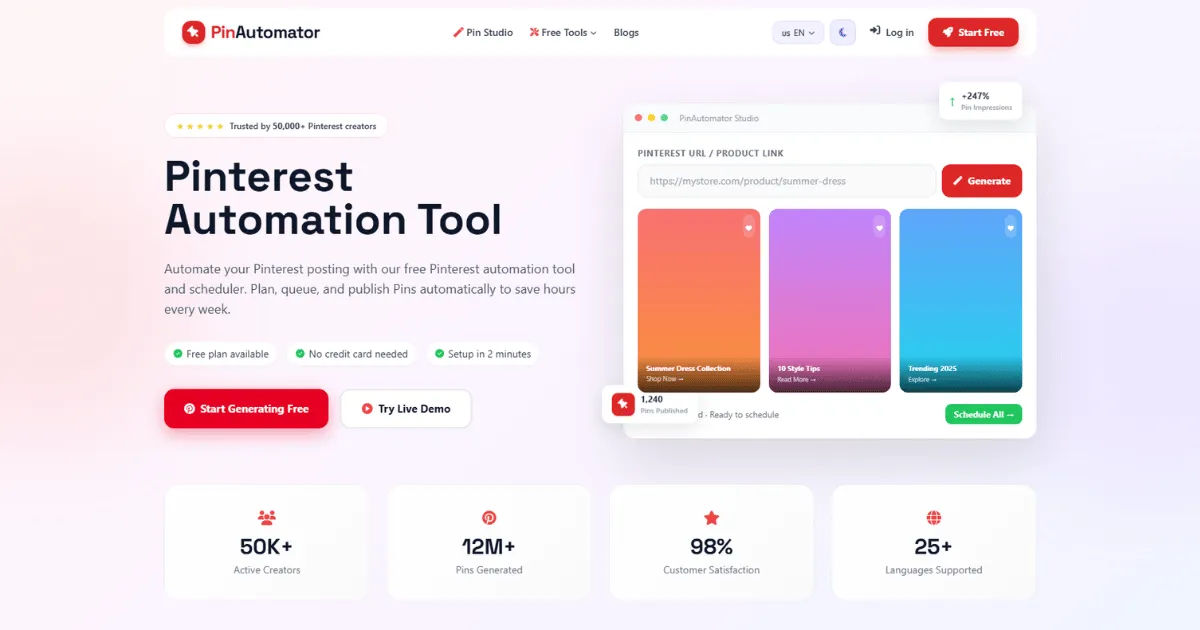
Managing a Pinterest Automation successfully requires consistency. Pinterest is not a platform where publishing one or two pins occasionally is always enough to build long-term visibility. Accounts often perform better when they regularly share useful, visually appealing, and relevant content. However, maintaining that consistency can become difficult when someone is managing several boards, multiple campaigns, or even multiple Pinterest accounts.
This is where Pinterest Automation becomes useful. Automation can simplify account management by helping users plan content in advance, schedule pins, organize publishing activities, and reduce the amount of manual work involved in everyday Pinterest marketing. When used responsibly, automation can create a more organized workflow while giving marketers greater control over their time.
The goal is not to remove the human element from Pinterest marketing. Instead, the purpose is to automate repetitive tasks so that users can spend more time developing better content, understanding their audience, and improving their overall strategy.
Pinterest Account Management
Pinterest account management involves much more than simply uploading images. A successful account requires regular planning, content creation, board organization, keyword research, performance monitoring, and audience understanding.
Every pin represents an opportunity to attract attention and encourage users to visit a website, blog, online store, or landing page. Because of this, marketers need to think carefully about what they publish and when they publish it.
Account management also includes maintaining a consistent visual identity. Businesses may use specific colors, fonts, photography styles, or design patterns across their pins. This helps users recognize the brand and creates a more professional appearance.
For individual creators and bloggers, account management may involve promoting articles, recipes, tutorials, products, or other resources. For online stores, Pinterest can become part of a larger strategy for product discovery and website traffic.
The challenge is that all these responsibilities require time.
A marketer may need to create dozens of pins, write descriptions, select boards, add links, and schedule content every week. If these tasks are performed manually, they can consume a significant portion of the workday.
This is why automation has become an attractive option for people who want to manage Pinterest more efficiently.
What Pinterest Automation Actually Means
Pinterest Automation refers to the use of software and organized workflows to simplify repetitive Pinterest marketing activities. Depending on the tool, automation may help with scheduling, content organization, publishing, analytics, and other account management tasks.
The exact features vary from one platform to another. Some tools focus mainly on scheduling. Others offer broader features designed to support content planning and performance analysis.
For example, a marketer might prepare a collection of pins on Monday and schedule them to be published throughout the week. Instead of manually logging in every day, the marketer can allow the scheduling system to publish the content according to the planned calendar.
This does not mean the entire Pinterest strategy runs without human involvement.
A person still needs to decide what content is valuable, create high-quality visuals, write appropriate descriptions, and review performance. Automation simply makes the operational side of the process easier.
The best approach is therefore to combine automation with human decision-making.
How Automation Reduces Repetitive Work
One of the biggest advantages of automation is that it reduces repetitive tasks.
Consider the number of steps involved in publishing a single pin. A user may need to select an image, upload it, add a title, write a description, include a destination link, choose a board, and decide when it should be published.
Repeating this process dozens of times can become tiring.
Automation tools can simplify this workflow by allowing users to prepare content in batches. Instead of completing every publishing task individually each day, marketers can organize several pieces of content at once.
This creates a more efficient working process.
For example, a blogger could spend two hours on Monday preparing content for the entire week. The pins can then be scheduled according to a publishing plan.
This approach saves time and reduces the need to constantly switch between creative work and administrative tasks.
Scheduling Content in Advance
Scheduling is one of the most useful ways automation can simplify Pinterest account management.
Without scheduling, users may need to remember to publish content at specific times. This can be difficult for people who have busy schedules or manage Pinterest as part of a larger marketing strategy.
A scheduling system allows marketers to prepare content ahead of time.
For example, a business can schedule pins for several days or weeks in advance. The content remains organized within the publishing system and is released according to the selected schedule.
This provides greater control over the content calendar.
It also reduces the risk of long gaps between posts. When content is planned in advance, marketers are less likely to forget important publishing tasks.
Scheduling can be especially helpful during holidays, product launches, seasonal campaigns, and promotional periods.
Instead of creating everything at the last minute, businesses can prepare their Pinterest content early and maintain a consistent publishing routine.
Creating a More Consistent Publishing Routine
Consistency is important for many Pinterest marketing strategies.
However, consistency does not necessarily mean publishing as much content as possible. It means developing a reliable and sustainable approach to sharing useful content.
Automation can help create this consistency by making it easier to maintain a regular publishing schedule.
For example, a creator may decide to publish several pieces of content throughout the week. With a scheduling system, the creator can organize the publishing calendar in advance.
This means the account remains active even when the creator is busy with other responsibilities.
Consistency can also make account management less stressful.
Instead of asking every morning what needs to be published, marketers can review their content calendar and know exactly what is planned.
This creates a predictable workflow that is easier to maintain over time.
Managing Multiple Boards More Efficiently
Pinterest accounts often contain multiple boards designed around different topics or content categories.
For example, a home improvement business might have boards for kitchen design, bathroom remodeling, outdoor spaces, interior decoration, and DIY projects.
Managing content across all these boards manually can become complicated.
Automation tools can help users organize content according to their publishing plans. This makes it easier to ensure that relevant content reaches the appropriate boards.
Better organization also reduces confusion.
Instead of keeping track of everything through spreadsheets, notes, or memory, marketers can use a centralized system to manage their scheduled content.
This is especially valuable for larger accounts with extensive content libraries.
Simplifying Content Planning
Content planning is another area where automation can improve account management.
Without a plan, marketers may publish content randomly. They might create pins whenever they have free time, which can result in inconsistent activity and repeated topics.
An organized content plan provides a clearer structure.
Marketers can identify important themes, seasonal opportunities, promotional campaigns, and evergreen topics before creating their pins.
Automation tools can support this process by allowing users to arrange content within a calendar or queue.
For example, a business might plan one week around educational content, another around products, and another around seasonal ideas.
This creates variety while keeping the overall strategy organized.
A content calendar also makes it easier to identify gaps.
If there is an empty period in the schedule, marketers can prepare additional content before the gap becomes a problem.
Making Batch Content Creation Easier
Batch creation is a powerful productivity method for Pinterest marketers.
Instead of designing one pin at a time, users can create several related designs during one focused work session.
Automation complements this approach by allowing the completed pins to be organized and scheduled together.
For example, a blogger may have ten articles that need promotion. The blogger can create multiple visual variations for each article, prepare the descriptions, and then organize the content for future publishing.
This reduces context switching.
When marketers constantly move between designing, writing, publishing, and analyzing, productivity can decrease. Batch creation allows them to focus on one type of task at a time.
Automation then handles much of the scheduling and organizational work afterward.
The result is a smoother workflow from content creation to publication.
Reducing the Pressure of Daily Account Management
Daily account management can become stressful when every task depends on manual action.
A marketer may have to remember what to publish, which board to use, which link to add, and when the content should go live.
Automation reduces some of this pressure by allowing work to be completed in advance.
Once content is properly prepared and scheduled, marketers can focus on other priorities.
This does not mean they should completely ignore their accounts.
Regular monitoring is still important. Marketers should review performance, respond to relevant engagement, check links, and update their strategy when necessary.
However, they do not need to spend every day completing repetitive publishing tasks.
This creates a healthier balance between automation and active account management.
Helping Small Businesses Save Time
Small businesses often have limited marketing resources.
A business owner may be responsible for social media, customer service, product management, sales, and other responsibilities at the same time.
Pinterest marketing can easily become difficult to maintain when there is no dedicated marketing team.
Automation can help small businesses make better use of limited time.
Instead of spending hours every week on manual publishing, business owners can prepare content in advance and use scheduling tools to manage distribution.
The time saved can then be used for activities that require human attention, such as improving products, answering customers, developing creative campaigns, or analyzing marketing results.
For a small business, saving even a few hours each week can have a meaningful impact.
Supporting Bloggers and Content Creators
Bloggers often have large libraries of existing content.
An article published several months ago may still be relevant and useful. However, manually promoting older content can be difficult.
Automation can help bloggers organize promotional content and maintain a steady flow of pins.
For example, an evergreen article about home organization can continue to be promoted months after publication.
A creator can prepare different pin designs and descriptions that highlight different aspects of the same article.
This gives valuable content additional opportunities to reach Pinterest users.
The key is to avoid repetitive or low-value publishing. Automation should support content variety rather than encourage unnecessary duplication.
Improving Workflow Organization
Good account management depends heavily on organization.
When content is scattered across folders, spreadsheets, design tools, and notes, it can become difficult to understand what has already been published.
Automation platforms can provide a centralized place for managing scheduled content.
Depending on the system, marketers may be able to view upcoming posts, review publishing queues, and organize campaigns.
This can make the entire workflow easier to understand.
For teams, organization becomes even more important.
Multiple people may be involved in content creation, design, copywriting, and marketing. A structured workflow helps everyone understand their responsibilities and deadlines.
Automation can therefore support both individual marketers and collaborative teams.
Helping Marketers Manage Campaigns
Pinterest is often used to support larger marketing campaigns.
For example, a company may launch a new product and want to promote it across several weeks.
Instead of publishing all promotional content at once, marketers can create a campaign schedule.
Automation makes it easier to organize the campaign and distribute content over time.
A campaign might include educational pins, product-focused designs, blog content, customer inspiration, and seasonal promotions.
By organizing these elements in advance, marketers can create a more balanced campaign.
This also makes it easier to maintain momentum.
Rather than relying on last-minute publishing, the campaign can follow a planned timeline.
Supporting Seasonal Content
Seasonal content often has a limited window of opportunity.
Holiday ideas, gift guides, wedding inspiration, travel content, and seasonal recipes may perform best when published at the right time.
Automation can help marketers prepare seasonal campaigns in advance.
For example, a business can create holiday content weeks before the season begins and schedule it according to its marketing plan.
This allows the team to focus on other activities when the season becomes busy.
Planning ahead also reduces the risk of missing important marketing opportunities.
Instead of trying to create content during the busiest period, marketers can prepare earlier and enter the season with an organized publishing plan.
Making Performance Monitoring More Manageable
Account management is not only about publishing content.
Marketers also need to understand how their content performs.
Analytics can reveal useful information about impressions, engagement, clicks, and other performance indicators.
Automation platforms that include analytics features may make it easier to review this information in one place.
This can help marketers identify patterns.
For example, they may discover that certain topics consistently attract more attention. They might also find that some visual styles perform better than others.
These insights can influence future content decisions.
However, analytics should not be viewed in isolation.
A successful strategy requires marketers to consider business goals as well as platform metrics.
A pin that receives many impressions may not necessarily generate meaningful website traffic or sales.
The most useful approach is to connect Pinterest performance with broader marketing objectives.
Helping Teams Work More Efficiently
Larger businesses may have several people involved in Pinterest management.
One person may create graphics, another may write descriptions, and another may analyze performance.
Without an organized workflow, these responsibilities can overlap or become confusing.
Automation can help create a more structured process.
Content can be prepared, reviewed, scheduled, and monitored according to established procedures.
This reduces unnecessary communication and helps teams understand what has already been completed.
Automation can also make it easier for managers to oversee campaigns without personally handling every publishing task.
The human team remains responsible for strategy and quality control, while automation supports the operational workflow.
Reducing Human Errors
Manual account management can sometimes lead to mistakes.
A marketer might accidentally publish content at the wrong time, forget to add a destination link, or overlook an important piece of content.
Automation does not eliminate all errors, but a structured system can reduce some common mistakes.
When content is prepared in advance, marketers have more time to review it before publication.
They can check descriptions, links, images, and board selections before scheduling.
This creates a useful quality-control stage.
However, automation should never be treated as a substitute for review.
Scheduled content should still be checked regularly to ensure that everything remains accurate and relevant.
Making Account Management More Scalable
One major benefit of automation is scalability.
A manual workflow that works for ten pins may become difficult when the account grows to hundreds of pieces of content.
Automation allows marketers to handle larger content volumes without increasing manual effort at the same rate.
This is particularly useful for businesses with extensive content libraries.
As the amount of content grows, marketers can continue using organized scheduling and planning systems rather than relying entirely on manual publishing.
Scalability is also important for agencies that manage accounts for multiple clients.
An organized automation workflow can help agencies manage different campaigns while maintaining clear schedules and processes.
Why Automation Does Not Replace Strategy
It is important to understand that automation is a tool, not a complete Pinterest strategy.
A scheduling system can publish content, but it cannot automatically guarantee that the content is valuable.
It cannot replace creative thinking, audience research, brand positioning, or thoughtful decision-making.
If the underlying strategy is weak, automation may simply make weak content easier to publish.
This is why marketers should first establish clear goals.
Are they trying to increase website traffic?
Generate leads?
Promote products?
Build brand awareness?
Grow an audience?
The answer should influence the content strategy.
Automation should then be used to support that strategy.
Combining Automation With Human Creativity
The strongest approach is usually a combination of technology and human creativity.
Automation can handle repetitive processes, while people focus on ideas and quality.
For example, a marketer can use automation to schedule content but personally create the visual concepts and messaging.
This division of responsibilities makes sense because creativity requires human understanding.
People can recognize trends, understand cultural context, develop emotional connections, and create original ideas.
Automation is better suited to repetitive organizational tasks.
When these strengths are combined, account management becomes more efficient without losing authenticity.
Avoiding Over-Automation
Automation can be helpful, but excessive automation can create problems.
If every aspect of an account is automated without supervision, content may become repetitive or irrelevant.
Audience engagement may also suffer if users feel that the account is not being actively managed.
Marketers should therefore maintain a human presence.
They should review content regularly, monitor performance, and respond appropriately to changes.
Automation should make account management easier, not eliminate thoughtful participation.
A good system provides efficiency while preserving quality.
Maintaining Content Quality
Quality should always remain a priority.
Publishing more content does not automatically create better results.
Each pin should provide a reason for users to stop scrolling and explore further.
Strong visual design, useful information, accurate descriptions, and relevant destination links all contribute to content quality.
Automation can help distribute quality content, but it cannot create value on its own.
Before scheduling content, marketers should ask whether the pin is useful to the intended audience.
They should also check whether the image is clear and attractive and whether the destination page matches the promise made by the pin.
These quality checks remain essential.
Using Automation Responsibly
Responsible automation means using tools to improve efficiency without attempting to manipulate the platform.
Marketers should follow Pinterest's current policies and guidelines when using automation features.
They should avoid practices that create spam, misleading content, excessive repetition, or artificial engagement.
The purpose of automation should be to manage legitimate marketing activities more efficiently.
A responsible approach focuses on quality, relevance, consistency, and audience value.
This protects the reputation of the account while creating a better experience for users.
Creating a Better Weekly Workflow
A simple weekly workflow can make Pinterest account management much easier.
A marketer might begin the week by reviewing analytics and identifying successful content.
Next, they can plan upcoming topics based on audience interests and business goals.
After that, they can create or collect the necessary visuals and write descriptions.
The completed content can then be organized into a scheduling system.
Finally, the marketer can review the publishing calendar and make adjustments before content goes live.
This workflow separates planning, creation, scheduling, and analysis.
The result is a more organized process that reduces daily pressure.
Automation becomes part of the workflow rather than the entire strategy.
How Automation Helps With Time Management
Time is one of the most valuable resources for marketers.
Every hour spent on repetitive administrative work is an hour that cannot be spent on creative or strategic activities.
Automation can improve time management by reducing the need to perform the same actions repeatedly.
For example, instead of logging into Pinterest several times each day, a marketer can schedule content ahead of time.
This creates larger blocks of uninterrupted time for more important tasks.
Better time management can also reduce burnout.
When marketers are constantly rushing to publish content, they may have less energy for creative thinking.
A more organized workflow gives them space to think strategically.
The Role of Content Libraries
A well-organized content library can make automation even more effective.
Marketers can maintain a collection of evergreen articles, product images, seasonal content, and promotional materials.
This library provides a valuable source of content for future campaigns.
Automation tools can then help organize and schedule these assets.
However, content libraries should be reviewed regularly.
Old information may become outdated. Links may stop working. Products may become unavailable.
Before reusing older content, marketers should confirm that it remains accurate and relevant.
This simple step helps maintain content quality.
Automation for Growing Businesses
As a business grows, marketing responsibilities often increase.
More products may require promotion. More blog posts may need distribution. More campaigns may need to be managed.
A manual Pinterest workflow can become increasingly difficult to maintain.
Automation provides a way to manage growth without adding the same amount of repetitive labor.
This makes it easier for businesses to expand their content strategies while keeping daily operations manageable.
However, growth should still be supported by a clear strategy.
Businesses should regularly evaluate which content contributes to their goals and which activities are no longer effective.
Automation makes scaling easier, but strategic decisions remain essential.
Measuring the Real Benefits of Automation
The success of automation should not be measured only by how many tasks it completes.
The more important question is whether it improves the overall marketing process.
Marketers can evaluate several factors.
They may consider how much time they save each week, whether publishing consistency improves, whether content quality becomes easier to maintain, and whether website traffic or conversions increase.
They can also examine whether automation allows them to spend more time on strategic work.
If a marketer saves several hours each week but uses that time to improve content and analyze performance, the overall benefit may be significant.
The real value of automation comes from what marketers do with the time they save.
Common Mistakes to Avoid
One common mistake is assuming that automation means marketers can stop monitoring their accounts.
This is not recommended.
Another mistake is publishing too much repetitive content.
Automation makes it easier to schedule large amounts of content, but quantity should never replace quality.
Some marketers also fail to review analytics.
Without performance data, it becomes difficult to know whether the strategy is working.
Another problem is scheduling content too far in advance without reviewing it.
Business priorities can change. Products can be discontinued. Trends can shift.
Scheduled content should therefore be reviewed regularly.
Finally, marketers should avoid relying entirely on automation.
A successful Pinterest presence still requires creativity, strategy, research, and human judgment.
A Practical Approach to Pinterest Automation
A practical automation strategy begins with clear goals.
Once goals are established, marketers can identify the repetitive tasks that consume the most time.
These tasks may include scheduling, content organization, campaign planning, or performance tracking.
The next step is to create a content calendar.
The calendar should include important topics, seasonal opportunities, promotional campaigns, and evergreen content.
Marketers can then prepare content in batches.
Once the content is reviewed, it can be scheduled according to the calendar.
After publishing begins, performance should be monitored.
The results can then be used to improve future content.
This creates a continuous cycle of planning, creating, scheduling, analyzing, and improving.
The Future of Automated Account Management
As digital marketing continues to evolve, automation is likely to become an increasingly important part of content management.
Technology can help marketers organize larger volumes of information and make routine processes more efficient.
However, the importance of human creativity is unlikely to disappear.
Audiences still respond to content that feels useful, relevant, original, and authentic.
The future of account management will likely involve a balance between automation and human involvement.
Technology can handle repetitive work while marketers focus on creative decisions and strategic direction.
This combination can create more efficient and sustainable marketing workflows.
Conclusion
Pinterest Automation can simplify account management by reducing repetitive work, improving scheduling, organizing content, and creating a more consistent publishing workflow. For marketers who manage active Pinterest accounts, these benefits can make everyday responsibilities easier to handle.
The biggest advantage is often time savings. Instead of manually publishing content every day, marketers can prepare posts in advance and organize them within a structured schedule. This reduces administrative work and gives creators more time to focus on content quality, strategy, audience research, and business goals.
Automation can also make multiple boards and larger content libraries easier to manage. As an account grows, manually tracking every piece of content can become increasingly difficult. A structured automation workflow provides greater organization and makes it easier to maintain a consistent publishing routine.
For bloggers, automation can help promote evergreen content over longer periods. For small businesses, it can reduce the amount of time required to maintain an active Pinterest presence. For marketing teams, it can create a more organized process for planning, reviewing, scheduling, and monitoring campaigns.
However, automation should never be viewed as a replacement for strategy or creativity. Technology can help publish content, but people must still decide what content deserves to be created and shared. Marketers need to understand their audience, maintain quality, review performance, and adjust their strategies when necessary.
The most effective approach is to use automation for repetitive and organizational tasks while keeping humans responsible for creativity, quality control, and strategic decisions. This balance allows marketers to gain the efficiency of technology without losing the authenticity and thoughtfulness that make content valuable.
Ultimately, the goal of Pinterest Automation is not simply to publish more content. The goal is to create a better-managed, more organized, and more sustainable marketing workflow. When automation is combined with useful content, thoughtful planning, regular performance analysis, and responsible account management, it can become a valuable part of a long-term Pinterest strategy.