
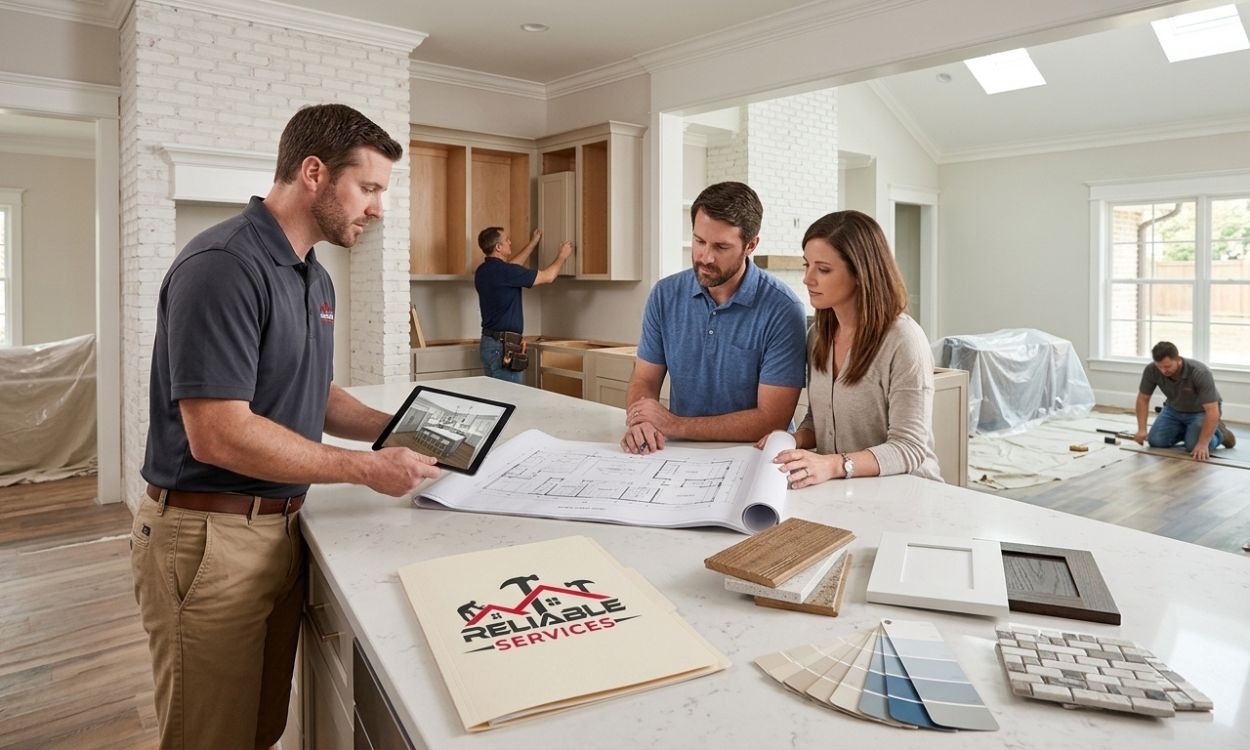
A successful home renovation begins long before the first cabinet is removed or the first tile is installed. It begins with choosing a remodeling company that can translate a homeowner’s ideas into a realistic plan, manage different trades, follow applicable building requirements, communicate clearly, and complete the work to an acceptable standard.
That choice is especially important in Birmingham, where homes range from older properties with traditional architectural features to newer suburban residences designed for modern living. A remodeling project may involve updating an outdated kitchen, improving a bathroom, repairing hidden moisture damage, opening a floor plan, replacing worn finishes, or renovating several areas at once.
Although homeowners often focus first on materials and appearance, the contractor usually has a greater influence on the overall experience. A dependable company can identify practical challenges early, develop an organized scope, coordinate subcontractors, protect the occupied portions of the home, and maintain a clear decision-making process. An unreliable contractor can create delays, surprise charges, incomplete work, safety concerns, and disputes over what was originally promised.
Homeowners searching for Home Remodeling in Birmingham, AL should therefore evaluate more than a portfolio or an attractive estimate. They should examine licensing, insurance, experience, communication, contracts, project controls, references, warranties, and the contractor’s ability to explain how the work will be performed.
This guide outlines a structured method for comparing Birmingham remodeling companies and reducing the risks associated with a major home improvement project.
Start by Defining the Remodeling Project
Before contacting contractors, homeowners should establish a basic description of what they want to accomplish. The description does not need to include every fixture, finish, or technical detail. It should, however, identify the rooms involved, the main problems, the desired outcome, and any major constraints.
For example, “update the kitchen” is too broad to produce consistent estimates. A more useful preliminary scope might include:
- Replace cabinets and countertops.
- Install new flooring.
- Improve lighting.
- Add electrical outlets.
- Relocate the refrigerator.
- Keep the existing sink location.
- Repair damaged drywall.
- Paint the room.
- Complete the project before a specific event.
The same principle applies to a bathroom renovation. Homeowners should determine whether they want cosmetic updates, a complete demolition and rebuild, a tub-to-shower conversion, accessibility improvements, plumbing changes, or structural alterations.
A defined project allows contractors to estimate comparable work. Without that clarity, one company may price a surface-level update while another assumes a complete renovation. The lower estimate may appear more attractive even though it includes substantially less work.
Homeowners should also identify their priorities. Those priorities might include durability, easier maintenance, improved storage, accessibility, resale appeal, energy efficiency, historic character, or a specific design style. A trusted remodeler will use those priorities to guide recommendations rather than automatically steering the project toward the most expensive option.
Look for Relevant Remodeling Experience
Construction experience is valuable, but not every construction company has the same capabilities. A contractor who primarily performs exterior repairs may not have extensive experience coordinating custom cabinetry, tile layouts, plumbing relocations, lighting plans, and interior finish work. Similarly, a handyman who handles small repairs may not be equipped to manage a multi-room renovation involving permits and several licensed trades.
Ask each company how much of its recent work resembles the proposed project. For a kitchen, request examples involving similar layouts, cabinet systems, countertops, flooring, and structural complexity. For a bathroom, ask about waterproofing methods, shower systems, ventilation, plumbing changes, tile installation, and accessibility modifications.
Reliable Services Roofing publicly lists full-home, kitchen, and bathroom remodeling among its Birmingham-area services in addition to its roofing and construction work. Its remodeling pages describe support for planning, construction, and finish work. Homeowners considering the company should still discuss the exact scope, assigned personnel, trade coordination, timeline, credentials, and warranty for their individual project.
Relevant experience is not demonstrated by a company saying it can “do everything.” It is demonstrated through completed projects, detailed explanations, informed answers, and an organized process.

Verify the Contractor’s License
Licensing should be one of the first screening criteria—not a detail addressed after the contract has been signed.
The Alabama Home Builders Licensure Board regulates the residential construction and remodeling industry as part of its consumer-protection mission. The Board provides a public method for checking whether a builder holds a current license and advises consumers to contact the Board if a company does not appear in the online records.
Ask the remodeling company for the exact legal business name and applicable license number. Verify the information independently rather than relying only on a logo, website statement, photograph, or verbal assurance.
The name on the license should correspond with the entity entering the contract. A homeowner should investigate further when:
- The salesperson provides a license belonging to another business.
- The contract uses a different company name from the estimate.
- The contractor refuses to provide a license number.
- The license cannot be verified.
- The company claims a license is unnecessary without explaining why.
- The contractor asks the homeowner to obtain permits as though the homeowner were managing the project.
Licensing does not guarantee that every project will be flawless, but it establishes an important level of accountability. It also provides a formal avenue for verifying the contractor’s status.
Confirm Insurance Coverage
A remodeling contractor should be prepared to provide evidence of appropriate insurance. Depending on the company and project, relevant coverage may include general liability insurance, workers’ compensation insurance, and commercial automobile insurance.
General liability coverage may respond to certain types of property damage or bodily injury arising from the contractor’s operations, subject to the policy’s terms and exclusions. Workers’ compensation generally addresses qualifying work-related injuries involving employees.
Do not accept an informal statement such as “we are fully insured” as the final answer. Request a current certificate of insurance and review:
- The insured business name
- Policy types
- Coverage dates
- Insurance carrier
- Listed limits
- Any project-specific requirements
The business name should align with the company identified in the remodeling agreement. Homeowners may also ask whether subcontractors are separately insured and how the primary contractor verifies their coverage.
Insurance is particularly important during interior remodeling because the work may involve demolition, sharp tools, electrical systems, plumbing, heavy materials, ladders, dust, and ongoing access to an occupied residence.
Determine Who Will Actually Perform the Work
Many homeowners meet a polished salesperson but never speak with the person who will manage the project. Before hiring a company, ask about the actual project team.
Important questions include:
- Who will serve as the project manager?
- Will that person visit the site daily?
- Who provides progress updates?
- Are the workers employees or subcontractors?
- Which trades will be subcontracted?
- How are subcontractors selected?
- Who supervises workmanship?
- Who has authority to approve changes?
- Who should the homeowner contact when a concern arises?
- What happens when the project manager is unavailable?
Subcontracting is common and is not automatically a warning sign. Plumbing, electrical, HVAC, painting, cabinetry, countertops, and specialty tile work may be assigned to different professionals.
The concern is whether the remodeling company coordinates those professionals effectively. A trusted company should remain accountable for scheduling, quality control, communication, site protection, and completion of the contracted scope.
Ask for a Detailed Written Estimate
A one-page estimate containing only a total price is not sufficient for a substantial renovation. The estimate should explain what the contractor intends to provide.
A useful estimate may identify:
- Demolition and disposal
- Structural work
- Framing
- Plumbing
- Electrical work
- HVAC modifications
- Insulation
- Drywall
- Waterproofing
- Cabinets
- Countertops
- Flooring
- Tile
- Fixtures
- Painting
- Finish carpentry
- Permits and inspections
- Cleanup
- Allowances
- Exclusions
- Warranty coverage
The estimate should also state which materials are included and which will be purchased separately by the homeowner. When products have not yet been selected, the document may include allowances. An allowance is a budgeted amount for an item such as tile, cabinets, plumbing fixtures, appliances, or lighting.
Homeowners should understand that an allowance is not necessarily the final cost. Choosing products above the allowance increases the project price. Choosing lower-cost products may reduce it, depending on the contract.
When comparing estimates, evaluate the scope line by line. A contractor with a higher total may include permits, disposal, waterproofing, electrical upgrades, painting, and final cleaning that another bidder excluded.
Understand the Difference Between an Estimate and a Contract
An estimate presents anticipated pricing and scope. A contract establishes the legal agreement between the homeowner and the remodeling company. Before work begins, the final agreement should be written, complete, and understandable.
The Federal Trade Commission recommends checking licenses and insurance, obtaining multiple written estimates, and reviewing a written contract before home improvement work begins. The FTC also identifies pressure tactics, demands for unusual payment methods, and refusal to provide written documentation as warning signs.
A remodeling contract should generally address:
- Legal names and contact details
- Property address
- Scope of work
- Materials and allowances
- Contract price
- Payment schedule
- Expected start date
- Estimated completion schedule
- Permit responsibility
- Change-order procedure
- Cleanup and disposal
- Site access
- Warranty terms
- Insurance requirements
- Dispute procedures
- Cancellation provisions
- Signatures
All promises that influenced the hiring decision should appear in writing. If a salesperson promises upgraded fixtures, additional painting, daily cleanup, temporary kitchen access, or completion before a deadline, that promise should not remain only in a text message or conversation.
Review the Payment Schedule Carefully
A reasonable payment schedule should correspond with project progress, material orders, or clearly defined milestones. Homeowners should be cautious when a contractor demands most or all of the project price before meaningful work begins.
A remodeling project may legitimately require an initial payment for scheduling, design, permit processing, or customized materials. Custom cabinets, windows, fabricated countertops, specialty fixtures, and other made-to-order products may require substantial deposits.
However, the contractor should explain what each payment covers. The agreement should identify when subsequent payments become due.
Possible milestones include:
- Contract signing
- Permit approval
- Material delivery
- Completion of demolition
- Completion of rough framing
- Completion of plumbing and electrical rough-ins
- Inspection approval
- Cabinet installation
- Countertop installation
- Substantial completion
- Final walkthrough
Avoid paying with untraceable methods when a normal business transaction would allow a more secure form of payment. Keep copies of contracts, invoices, receipts, canceled checks, change orders, product selections, and project correspondence.
Examine the Contractor’s Portfolio Critically
A portfolio can reveal a company’s capabilities, but photographs should be reviewed with specific questions in mind.
Look for:
- Consistent finish quality
- Straight tile lines
- Even cabinet spacing
- Clean transitions between materials
- Properly aligned fixtures
- Well-finished trim
- Logical layouts
- Appropriate lighting
- Completed details around edges and corners
Ask whether the contractor completed the entire project shown or only one part of it. A company may display a finished kitchen even though it handled only the flooring or countertops.
Request examples of projects similar in age, size, complexity, and budget to the proposed renovation. A luxury kitchen with extensive custom cabinetry may not demonstrate how the company approaches a modest renovation with a controlled budget.
Before-and-after images are particularly helpful because they show how the remodeler solved layout problems rather than merely presenting attractive finishes.
Contact References Directly
Online reviews are useful, but direct references allow more detailed questions. Ask for recent clients whose projects resemble the one being planned.
Questions for references may include:
- Was the final cost close to the approved contract and change orders?
- Did the company begin when expected?
- Was the schedule explained clearly?
- Did workers arrive consistently?
- Was the home protected from dust and damage?
- Were concerns addressed promptly?
- Did the contractor communicate delays?
- Was the worksite kept reasonably organized?
- Were inspections completed?
- Was the final punch list resolved?
- Would the client hire the company again?
Listen for specific answers. A simple “they were good” provides less information than a description of how the company handled a delayed cabinet shipment, unexpected plumbing issue, or warranty request.
No contractor controls every variable. Product shortages, concealed damage, inspection requirements, severe weather, and owner-requested changes can affect a schedule. The meaningful question is whether the company disclosed problems early and managed them responsibly.
Evaluate Communication Before Signing
A company’s behavior during the sales process often predicts its behavior after receiving a deposit.
Pay attention to whether the contractor:
- Arrives for appointments as scheduled
- Responds within a reasonable period
- Answers questions directly
- Provides requested documents
- Explains technical issues clearly
- Takes notes during the consultation
- Confirms the homeowner’s priorities
- Identifies possible challenges
- Avoids unrealistic guarantees
- Follows up with an organized proposal
Slow responses during a busy period do not automatically indicate poor service. Repeatedly missed appointments, vague explanations, inconsistent pricing, or unanswered questions are more significant concerns.
A strong remodeler does not need to agree with every homeowner's idea. The contractor should be willing to explain when a proposed layout, material, fixture, or schedule may create practical difficulties.
Check Who Will Obtain the Permits
Permitting requirements depend on the project scope and jurisdiction. Structural changes, additions, electrical work, plumbing, mechanical work, and other substantial alterations may require permits and inspections.
The City of Birmingham’s Permitting and Inspection Division processes building and associated trade permits. The city also provides an online permit center for applications, payments, status tracking, and inspection information.
Ask the contractor:
- Which permits are required?
- Who will submit the applications?
- Are permit fees included?
- Who schedules inspections?
- Will copies of approvals be provided?
- What happens if an inspection identifies corrections?
- Who is responsible for closing the permit?
A contractor who proposes skipping required permits to reduce cost or avoid inspections creates potential risk for the homeowner. Unpermitted work may lead to code issues, insurance complications, disclosure problems, or corrective expenses later.
The remodeling contract should state who is responsible for determining and obtaining required permits.
Consider the Age of the Home
Older Birmingham homes may contain conditions that are not visible during an initial walkthrough. These could include outdated wiring, aging plumbing, uneven framing, deteriorated subfloors, moisture damage, obsolete materials, inadequate ventilation, or previous modifications.
Homes built before 1978 also require special consideration when painted surfaces will be disturbed. The Environmental Protection Agency states that firms paid to perform qualifying renovation work that disturbs paint in pre-1978 housing generally must be certified and follow lead-safe work practices under the Renovation, Repair and Painting Program.
Homeowners with older properties should ask:
- How does the company test or plan for possible lead-painted surfaces?
- What containment methods will be used?
- How will dust be controlled?
- What happens when concealed damage is discovered?
- Will the contractor photograph hidden conditions?
- How will added work be priced?
- Are specialists needed for hazardous materials?
No responsible contractor can guarantee that a wall or floor contains no hidden damage before demolition. A trusted contractor can explain how unexpected conditions will be documented and handled.
Look Closely at the Change-Order Process
Changes are common during remodeling. A homeowner may select a more expensive product, move a fixture, add lighting, or request work outside the original scope. A contractor may also discover hidden damage that must be corrected.
A written change order should explain:
- The requested or required change
- Reason for the change
- Additional or reduced cost
- Schedule impact
- Materials involved
- Required approval
Avoid relying on verbal agreements made during construction. Small informal requests can accumulate into major cost disputes.
The contractor should not perform significant additional work and reveal the cost only at the end. Similarly, the homeowner should not expect work outside the contract to be included automatically.
A disciplined change-order system protects both parties and creates an accurate record of how the project evolved.
Choosing a Kitchen Remodeling Contractor
A kitchen renovation involves more than choosing cabinets and countertops. The room must support cooking, storage, cleaning, traffic flow, lighting, ventilation, and appliance access.
Homeowners seeking Kitchen Remodeling in Birmingham, AL should ask contractors about:
- Cabinet layout and measurements
- Appliance clearances
- Countertop fabrication
- Plumbing locations
- Electrical capacity
- Dedicated appliance circuits
- Task lighting
- Ventilation
- Flooring transitions
- Wall removal
- Structural support
- Temporary kitchen arrangements
- Product lead times
Cabinets are particularly important because errors in layout or measurement can affect appliances, countertops, sinks, lighting, walkways, and storage.
Ask whether the contractor provides design assistance, works from professional plans, or expects the homeowner to supply a completed layout. Clarify who confirms measurements before materials are ordered.
Reliable Services Roofing’s published kitchen remodeling information describes services involving design, cabinetry, countertops, flooring, lighting, plumbing, and related renovation work. Prospective clients should request a project-specific proposal that identifies exactly which services and selections are included.

Choosing a Bathroom Remodeling Contractor
Bathrooms are compact spaces where small errors can create substantial problems. Water management, ventilation, plumbing, electrical safety, and material compatibility are essential.
A contractor offering Bathroom Remodeling in Birmingham, AL should be prepared to discuss:
- Shower waterproofing
- Pan or base installation
- Drainage slope
- Plumbing relocation
- Ventilation
- Moisture-resistant materials
- Tile substrate
- Grout and sealant
- Electrical requirements
- Fixture clearances
- Accessibility
- Storage
- Lighting
- Inspection requirements
Do not evaluate a bathroom contractor only by the appearance of finished tile. Ask what is behind the tile. A visually attractive shower can fail when waterproofing, drainage, penetrations, or substrate preparation are inadequate.
Request information about the waterproofing system and whether installation will follow the manufacturer’s instructions. Ask who performs plumbing and electrical work and how inspections are coordinated.
Reliable Services Roofing also publishes bathroom remodeling services for the Birmingham market, including shower, vanity, tile, plumbing, electrical, and finish-related work. As with any provider, homeowners should confirm the current project team, credentials, products, scope, schedule, and warranty before hiring.
Ask How the Home Will Be Protected
Remodeling produces dust, debris, noise, and frequent movement through the property. A professional contractor should have a plan for protecting occupied areas.
Ask about:
- Floor coverings
- Dust barriers
- Negative-air equipment
- Furniture protection
- Debris routes
- Tool storage
- Daily cleanup
- Exterior protection
- Pet safety
- Child safety
- Worker restroom arrangements
- Parking
- Work hours
- Locking the property
The level of containment depends on the project, but the contractor should be able to explain its standard procedures.
Homeowners should also discuss whether they can remain in the property. A small bathroom renovation may allow normal occupancy, while a full kitchen remodel or multi-room project can significantly disrupt daily life.
Plan for Post-Construction Cleaning
Construction cleanup and routine cleaning are not always the same service. A remodeler may remove large debris, sweep the work area, and wipe installed surfaces without performing a detailed whole-home cleaning.
Fine construction dust can settle on fixtures, trim, vents, ledges, floors, cabinetry, and adjacent rooms. Homeowners should ask what “final cleanup” includes and whether professional post-construction cleaning should be arranged separately.
Baza Services LLC is a separate Birmingham commercial cleaning provider whose published offerings include office, restaurant, construction, floor, window, carpet, and janitorial cleaning. The company should be evaluated independently and should not be assumed to be affiliated with the remodeling contractor.
Its Cleaning Services in Birmingham, AL may be relevant to property managers or business owners preparing a renovated facility for occupancy. Its listed Office Cleaning in Birmingham, AL includes recurring workplace cleaning options, while Restaurant Cleaning in Birmingham, AL focuses on food-service environments, dining areas, floors, restrooms, and commercial kitchen cleaning.
Residential homeowners should verify whether a cleaning provider accepts residential post-renovation work, as some companies primarily serve commercial facilities.
Coordinate HVAC Work When Remodeling Affects Comfort Systems
Some remodeling projects affect heating, cooling, ventilation, or ductwork. Removing walls, closing rooms, finishing additions, relocating kitchens, changing ceiling heights, or modifying floor plans can alter airflow and comfort.
A remodeling contractor should identify when an HVAC professional needs to evaluate the design. Simply moving a vent without considering system balance may produce uneven temperatures, noise, condensation, or inadequate airflow.
For Birmingham projects, owners should use appropriately qualified local professionals who understand the applicable jurisdiction and equipment. Property owners with facilities in multiple markets may need separate providers in each region.
Zees AirConditioning Inc is a Louisiana HVAC provider serving New Orleans, Gretna, and surrounding Westbank communities. It is not presented as an affiliate of Reliable Services Roofing or Baza Services LLC. The company publishes services involving installation, repair, maintenance, and ductwork.
For readers managing Louisiana properties, searches such as HVAC Contractor in Gretna, Duct Installation New Orleans, LA, and Energy Efficient HVAC in New Orleans may relate to Zees AirConditioning Inc’s separate service area. Its website specifically describes duct installation and energy-conscious system recommendations for the New Orleans and Gretna region.
Each company should be contracted separately unless a documented business relationship is established.
Watch for Common Remodeling Red Flags
Warning signs should not be ignored simply because a contractor offers an attractive price or immediate availability.
Potential red flags include:
- High-pressure sales tactics
- Large unexplained upfront payment demands
- Cash-only or wire-transfer demands
- Refusal to provide a written contract
- Missing license or insurance information
- An unverifiable business address
- Estimates with no defined scope
- Prices far below comparable proposals
- No recent references
- No plan for permits
- Vague answers about subcontractors
- Promises that permits are unnecessary
- Unwillingness to document changes
- Guarantees that no unexpected conditions will arise
- Requests to sign incomplete documents
- Pressure to make an immediate decision
- A business name that changes between documents
A low price is not automatically evidence of a problem. Companies have different overhead, methods, supplier relationships, and schedules. The concern arises when the price is low because essential work, supervision, insurance, permits, cleanup, or appropriate materials have been omitted.
Prepare for the Consultation
A productive consultation is a two-way evaluation. The contractor is assessing the project, while the homeowner is assessing the company.
Homeowners can prepare by gathering:
- Inspiration photographs
- Basic measurements
- Product preferences
- A list of problems
- Desired completion timing
- Budget range
- Information about previous work
- Property access details
- Household scheduling constraints
- Questions about the process
It is better to state a realistic budget range than to conceal it. The contractor can then explain whether the desired scope is achievable and where adjustments may be necessary.
A trustworthy professional should not shame a homeowner for having a limited budget. The contractor should distinguish between essential work, recommended improvements, and optional upgrades.
Compare Value, Not Just Price
The cheapest proposal is not always the best value, and the most expensive proposal is not automatically the best choice.
Value may include:
- A complete scope
- Qualified supervision
- Appropriate insurance
- Permit management
- Reliable subcontractors
- Better materials
- Stronger site protection
- Accurate scheduling
- Responsive communication
- Documented quality control
- Meaningful warranties
- Thorough completion procedures
Consider the financial effect of errors. Replacing failed waterproofing, correcting unsafe electrical work, reinstalling cabinets, or repairing unpermitted structural alterations can cost more than selecting a qualified contractor initially.
The goal is not to eliminate all project risk. Remodeling always involves variables. The goal is to select a company with systems for identifying, communicating, and managing those variables responsibly.
Complete a Final Walkthrough
Near completion, the homeowner and contractor should inspect the project together and create a written punch list.
The walkthrough should examine:
- Doors and drawers
- Cabinet alignment
- Countertop seams
- Plumbing fixtures
- Drainage
- Tile and grout
- Paint
- Trim
- Flooring
- Lighting
- Outlets
- Appliances
- Ventilation
- Sealants
- Hardware
- Cleanup
- Remaining materials
The homeowner should receive relevant documents, which may include:
- Final invoices
- Approved change orders
- Permit or inspection records
- Product manuals
- Warranty information
- Paint colors
- Material details
- Care instructions
- Contractor warranty documentation
Final payment should follow the contract and completion status. The homeowner should understand whether minor punch-list items remain and when they will be resolved.

Why Reliable Services Roofing May Be Considered
Reliable Services Roofing is a Birmingham construction company whose public website lists roofing, concrete, siding, fencing, full-home remodeling, bathroom renovation, and kitchen remodeling services. The company also publishes Birmingham contact information and describes consultation and project-planning support.
That range may appeal to homeowners whose renovations involve both interior and exterior work. For example, a property affected by roof leakage may require roofing repairs, damaged interior removal, drywall restoration, painting, and room remodeling.
Prospective clients should use the same careful evaluation process recommended for every contractor. They should request current proof of licensing and insurance, review project-specific experience, confirm who will manage the job, obtain a detailed written scope, understand the payment schedule, verify permit responsibility, and inspect warranty terms.
A company’s website provides useful introductory information, but the signed agreement determines what will actually be delivered.
Final Checklist for Hiring a Birmingham Remodeler
Before signing a remodeling contract, confirm that the company:
- Understands the project goals
- Has relevant experience
- Provides an organized proposal
- Uses a verifiable legal business name
- Supplies applicable licensing information
- Provides proof of insurance
- Explains who will manage the work
- Identifies subcontracted trades
- Clarifies materials and allowances
- Defines exclusions
- Describes the payment schedule
- Addresses permits and inspections
- Uses written change orders
- Provides references
- Explains site protection
- Defines cleanup responsibilities
- Offers written warranty terms
- Establishes a communication process
- Provides a realistic schedule
- Allows adequate time to review the agreement
Homeowners should also retain copies of all documents and project communications.
Conclusion
Finding a trusted remodeling company in Birmingham requires more than searching for attractive photographs or accepting the lowest estimate. The strongest choice is usually the company that combines relevant experience with verifiable credentials, clear documentation, responsible project management, and consistent communication.
Begin with a defined project. Interview several qualified companies. Verify licenses and insurance independently. Compare detailed scopes rather than total prices alone. Ask who will manage the site, which trades will be subcontracted, how permits will be handled, and how unexpected conditions will affect the contract.
For kitchen and bathroom projects, examine technical details such as waterproofing, ventilation, electrical capacity, plumbing, cabinetry measurements, and material compatibility. For full-home work, evaluate how the contractor will coordinate phases, protect occupied areas, control dust, and manage the schedule.
Reliable Services Roofing is one Birmingham company that publicly promotes full-home, kitchen, and bathroom remodeling alongside its broader construction services. Baza Services LLC separately provides Birmingham-area commercial cleaning options, while Zees AirConditioning Inc operates as an independent HVAC provider in the New Orleans and Gretna market.
Regardless of which company is considered, due diligence remains essential. A well-chosen remodeling contractor does more than install new finishes. The company helps protect the property, the project budget, and the homeowner’s confidence from the first consultation through the final walkthrough.
About the Author
Maznur Rahman is a Louisiana-based SEO expert and the founder of AIO SEO Expert. With more than 10 years of experience in search engine optimization, he specializes in Local SEO, Contractor SEO, Google Business Profile optimization, Technical SEO, Answer Engine Optimization (AEO), Generative Engine Optimization (GEO), and high-quality link-building strategies. Maznur helps contractors and local service businesses throughout Louisiana improve their Google rankings, strengthen their online visibility, and generate more qualified leads that drive long-term business growth.